Cheaper Alternatives to Studying in the UK: A Practical Guide for Nigerian Families
Exposing the true costs of overseas study and highlighting highly affordable, tuition-free, and high-employment alternatives to the UK for Nigerian students.
August 17, 2026
9 min read
Dhub Editorial
Short answer: The best cheaper alternatives to studying in the UK for Nigerian students are Germany, which offers tuition-free public universities and an 18-month post-study work visa; Canada's regional provinces like Manitoba and Nova Scotia, which offer affordable tuition and three-year work permits; and Ireland, providing a clear two-year post-study pathway.
The short version
Germany offers tuition-free public university education in English with only modest semester fees.
Canada remains viable if you bypass expensive cities like Toronto for affordable provinces like Manitoba and Saskatchewan.
Ireland provides a straightforward, English-speaking environment with a two-year post-study work scheme.
Countries like Austria and France offer excellent degrees with nominal administrative fees under 800 Euros per semester.
The Reality of the UK Route in 2026
For many Nigerian families, sending a child to study abroad has historically meant booking a one-way ticket to London. However, in 2026, the traditional path is becoming increasingly narrow. Recent changes to visa policies, study permit restrictions, and strict financial requirements have forced parents and students to ask hard questions. If you are looking for academic value, realistic job prospects, and clear long-term immigration opportunities, you must look beyond the familiar.
You can read our detailed breakdown on whether Is UK Study Still Worth It for Nigerian Students? to understand how the shifting landscape affects your planning. For those ready to explore, finding cheaper alternatives to studying in the UK is no longer just a budget-saving tactic—it is a strategic necessity to protect your family's hard-earned capital.
Germany: The Tuition-Free Powerhouse
When evaluating cheaper alternatives to studying in the UK, Germany is arguably the most financially viable option. Public universities in Germany offer tuition-free study programs for international students. Apart from a modest semester contribution of €150 to €300, you do not pay tuition at most public institutions. For example, institutions like the Freie Universität Berlin, University of Bayreuth, TU Darmstadt, and Saarland University charge no tuition fees for non-EU students.
Comparison of UK Study Alternatives for Nigerian Students
Country
Average Annual Tuition
Post-Study Work Visa Length
Primary Language
Germany
Tuition-Free (€150-€300 semester fee)
18 Months
German (English programmes widely available)
Ireland
Varies by Institution
24 Months (Stamp 1G)
English
Austria
~€1,460 per year (€730 per semester)
Subject to local rules
German (Many English programmes)
France (Paris-Sud)
~€340 per year (€170 per semester)
Subject to local rules
French (English programmes available)
Canada (Regional)
Moderate (Manitoba/Saskatchewan)
Up to 3 Years (PGWP)
English / French
Germany offers world-renowned public universities with zero tuition fees for international students.
Canada: Regional Affordability Beyond Toronto
Canada remains a premier destination, but the reality of 2026 demands a shift in geography. While popular hubs like Toronto and Vancouver feature exceptionally high tuition and living costs, specific provinces offer a far more sustainable path. Provinces such as Manitoba, Saskatchewan, and Nova Scotia offer more affordable alternatives with better immigration opportunities.
By opting for regional universities, you secure the same high-quality Canadian education at a fraction of the cost. Additionally, graduates from designated learning institutions can access the Post-Graduation Work Permit (PGWP), which allows you to work for up to three years depending on your programme length. This remains a highly attractive route for families with long-term residency goals.
The Story
The Road Untravelled
A skeptical father in Lagos bypasses a predatory agent's high-pressure UK sales pitch to discover a legitimate, tuition-free path to Germany with the help of a dedicated counsellor.
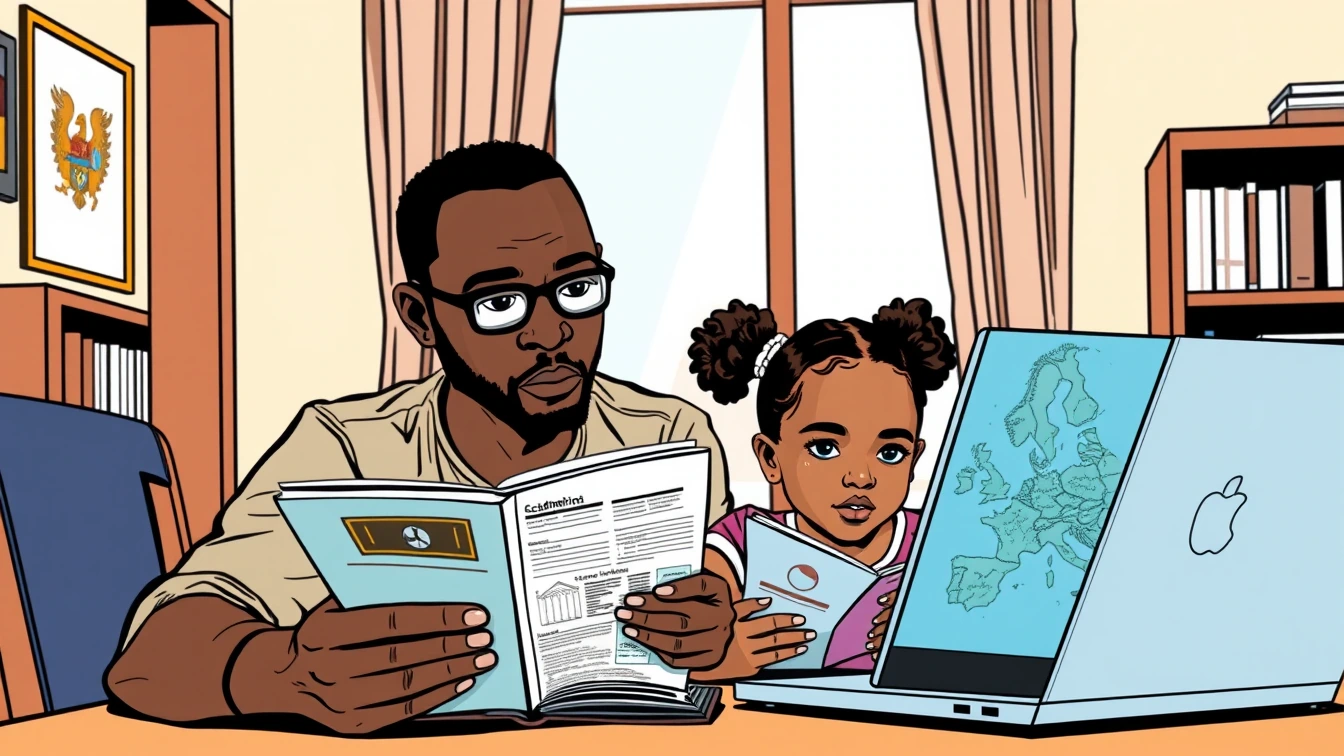
Chisom and Clement celebrate her official tuition-free admission letter from Germany.
The living room in Surulere was filled with the low hum of the standing fan, but the air felt lighter than it had in months. Clement Nwachukwu adjusted his glasses as he looked at the official email displayed on the laptop screen. His daughter, Chisom, let out a sharp laugh that ended in a sob, clutching a printed document tightly to her chest. It was an official, verified admission letter from TU Darmstadt in Germany, confirming her place in their English-taught computer science master's programme with zero tuition fees.
"Papa, it is real," Chisom whispered, her voice shaking. "No tuition. Only a semester contribution. We are actually doing this." Clement sighed, the deep knots of worry in his shoulders finally dissolving. Just three months ago, they were staring at a demanding £22,000 tuition bill from a mid-tier UK university, pressured by an agent who insisted it was their only hope. Now, they had a secure, legal, and incredibly affordable path forward.
The Agent's Hard Sell
Mr. Pius pushes an expensive UK programme in his Allen Avenue office.
To understand their relief, one had to go back to the humid afternoon in November when they sat in Mr. Pius’s small, stuffy office on Allen Avenue. The walls were lined with faded posters of Big Ben and the London Eye. Mr. Pius leaned across his desk, tapping a calculator with a theatrical flourish that made Clement instantly suspicious. He was pushing a UK business management programme, brushing aside Chisom’s actual interest in technology.
"The UK is the only market that matters now, Chief," Mr. Pius had declared, his voice booming over the sound of the street traffic outside. "Pay me the five-hundred thousand Naira consultation fee today, and we will secure the admission. Don't worry about the tuition; we will sort the deposit later. If you delay, the visa caps will close." Chisom had looked at her father, her excitement masked by the looming shadow of a massive loan they would have to take from the bank.
A Father's Doubt
Clement questions the agent's high costs, receiving defensive and evasive answers.
The cracks in Mr. Pius's promises began to show a week later. Clement, a retired civil servant who kept every receipt in a dedicated plastic folder, started researching the actual living costs in British cities. The math simply did not add up. When he asked Mr. Pius about cheaper European alternatives like Germany or public universities in France, the agent’s warm smile quickly curdled into irritation.
"Europe? You want your daughter to learn a new language from scratch?" Mr. Pius scoffed, dismissively waving his hand. "There are no English programmes there, and the visas are impossible for Nigerians. Stick to my plan, Chief." Chisom sat silently, her fingers nervously tracing the hem of her lace kaftan. She knew her friends were already receiving warnings about unverified agents who disappeared once the first large tuition deposit was transferred. Clement decided then that they needed a second opinion.
The Alternative Path
Aduke Balogun introduces the family to tuition-free English programmes in Germany.
The next morning, Clement and Chisom walked into the Dhub Education office. Unlike Mr. Pius's chaotic room, this office felt calm and professional. They were met by Aduke Balogun, a counsellor who did not start by demanding a consultation fee or pushing a specific country. Instead, she listened, took detailed notes on Chisom's academic background, and opened an official database of international programmes.
"Let us look at the facts," Aduke said quietly, turning her screen so they could both see. "You do not need to pay British tuition rates to get an English-taught degree. Germany has thousands of tuition-free programmes in English, and countries like Austria and France charge nominal administrative fees. Let us look at what matches Chisom's computer science background without putting your family into debt." Clement felt a surge of hope as Aduke printed out official university profiles, explaining the exact process for verifying documents.
A Plan Built on Truth
Aduke Balogun presents the completed, verified application file to the family.
Over the next few weeks, Aduke managed every detail of Chisom’s applications. She showed them how to set up the German blocked account directly, ensuring that every Naira they spent went straight into Chisom’s own name rather than an unverified agent's personal account. There were no hidden fees or sudden demands for cash. Aduke's colleagues in the United Kingdom even helped cross-reference the European institutions to ensure their qualifications were fully state-recognised.
"We are focusing on TU Darmstadt," Aduke explained during their final review meeting, handing Clement a neatly organised binder of completed paperwork. "The programme is entirely in English, and your only cost is a small semester fee. No tuition." Looking at the clear, structured plan, Clement knew they had escaped a major financial trap. They had found a genuine alternative that preserved both Chisom's future and the family's hard-earned savings.
What this story proves: Do not let high-pressure agents convince you that expensive UK degrees are your only option; verified, tuition-free English programmes exist if you use a professional, transparent path.
Ireland: The English-Speaking Gateway
Ireland stands out as an excellent English-speaking alternative with a welcoming atmosphere and a strong Nigerian community. For families hesitant about non-English-speaking countries, Ireland offers a straightforward academic environment. Under the Third-Level Graduate Scheme (Stamp 1G), graduates of recognised Irish higher-education institutions can stay for 24 months to seek employment.
To qualify, you must apply within six months of graduation, present your Irish Residence Permit (IRP) card, and pay a €300 registration fee. This provides a clear, two-year runway to secure a Critical Skills or General Employment Permit. This makes Ireland one of the most reliable springboards for career progression in the European technology and financial sectors.
Working with verified advisors helps you navigate complex European university requirements.
Other Low-Cost European Options
Beyond the prominent destinations, mainland Europe hosts several highly affordable, English-taught academic routes. In Austria, the historic University of Vienna charges non-EU international students only around €730 per semester. In France, the University of Paris-Sud charges a small processing fee of approximately €170 per semester, offering sciences, physics, economics, and management programmes in English.
Is it really possible to study in English at a tuition-free university in Germany?
Yes. Germany public universities offer 2,738 English-taught bachelor's and master's programmes, allowing international students to complete their degrees without needing fluency in German.
What are the post-study work rights in Germany compared to the UK?
Germany offers graduates a post-study residence permit for up to 18 months to seek qualified employment, during which you can work any job to cover living costs.
Are there English-speaking options in Europe with low tuition fees?
Yes. Ireland offers a completely English-speaking environment with a 24-month post-study work scheme, while countries like Austria and France offer English-taught programmes for nominal semester fees under €800.
Researched and drafted with AI against the sources listed above, then published by Dhub Education. Policies and costs change quickly — always confirm details with the university or the relevant government body before you act.