First Month Living Expenses in the UK for International Students: The Settling-In Survival Guide
Prepare for the first ninety days abroad. Learn how to manage first month living expenses in the UK for international students, avoid deposit traps, and settle smoothly.
October 26, 2026
9 min read
Dhub Editorial
Short answer: First month living expenses in the UK for international students typically total £900 to £1,400 outside London and £1,300 to £1,400 in London. Beyond rent and food, initial costs include housing deposits, local transport passes (£80–£155), mobile setup, and upfront living supplies, requiring extra emergency buffer funds during arrival.
The short version
Monthly living expenses in the UK average £900 to £1,400 outside London and £1,300 to £1,400 inside London.
Upfront month-one costs often surprise families because housing deposits, transport passes, and basic setup supplies require immediate cash before banking access is finalized.
Opening a local student bank account requires your passport, visa documentation, and official university proof of address.
University health services, counseling teams, and international offices offer free or low-cost support to help manage homesickness and cultural adjustment.
Working directly with Dhub Education ensures you receive verified pre-departure budgeting guidance without falling for unverified agent traps.
Navigating Airport Arrival and Initial Immigration
Stepping off the plane into your study destination is an exciting milestone, but the first forty-eight hours require careful tactical planning. For many Nigerian students, landing abroad brings immediate administrative tasks, from clearing border controls to navigating initial transportation. Before leaving home, ensure you have a small amount of local physical currency or an active international card to cover immediate needs like train or taxi fares. If you are reviewing your pre-departure preparations, our first ninety days abroad checklist breaks down every essential document you need in your hand luggage.
Upon arrival at the airport, immigration officers will check your passport, student visa, and university acceptance documents. Having digital and printed copies ready prevents delays. Once cleared, securing a local SIM card at the airport or nearby station is critical so you can contact family back home and access local maps. Managing these initial hours smoothly sets a stable foundation for the rest of your first week.
Understanding First Month Living Expenses in the UK for International Students
When planning your budget, understanding the true first month living expenses in the UK for international students is essential. According to official guidelines, living costs outside London range from £900 to £1,300 per month, while living in London costs roughly £1,300 to £1,400 per month to cover rent, bills, groceries, and local travel. On a broader scale, total annual UK living expenses average around £12,180.
However, month one is always more expensive than subsequent months. Many students are ambushed by upfront setup costs. You are not just paying rent; you are buying bedding, kitchen utensils, initial groceries, and local transport passes. For example, monthly food expenses typically average £80 outside London and £140 in London, while local transport averages £116 outside London and £155 in London. To understand total financial commitments before traveling, read our breakdown on how much you actually need to start studying in the UK.
Estimated Monthly Living Expenses for International Students in the UK (2026)
Expense Category
Outside London (Monthly)
London (Monthly)
Upfront Month-One Ambush Fees
Single Occupancy Halls Rent
£664 average (£373 - £1,536 range)
£848 average
1 to 2 months rent security deposit
Shared Private Room Rent
£554 average
£750 average
Tenancy holding fees & key deposits
Groceries & Food
£80 average
£140 average
First-week pantry & kitchen setup
Local Travel & Transport
£116 average
£155 average
Upfront monthly travel pass card
Total Monthly Spending
£900 - £1,300
£1,300 - £1,400
Emergency buffer cash (£200 - £400)
Opening a local bank account requires official university proof of address and valid visa documents.
Securing Accommodation and Managing Upfront Deposits
Accommodation represents the largest single slice of your budget. Student housing in the UK ranges widely, with university halls or private rooms costing between £373 and £1,536 per month depending on location and room specification. Average monthly rent for non-catered single occupancy halls stands at £664 outside London and £848 in London, whereas a room in shared private accommodation averages £554 outside London and £750 in London.
During your first week, check into your pre-booked short-term or long-term housing immediately. Be prepared for deposit requirements: landlords usually require a refundable security deposit before handovers. Always inspect the property, verify tenancy terms, and obtain official receipts for every payment made. Never transfer money to unverified personal accounts without contract documentation.
The Story
The First Month Ledger
Arriving in Sheffield expecting smooth sailing, Dayo finds unexpected upfront costs threatening to drain his initial budget before his first lecture even begins.
Dayo Adebanjo — 22-year-old international master's student
Chief Babatunde Adebanjo — 56-year-old father and businessman in Ibadan
Kemi Mustapha — 34-year-old Dhub Education senior advisor
The Cold Landing in Sheffield
Dayo lands in Sheffield with dead phone battery and no local currency cash.
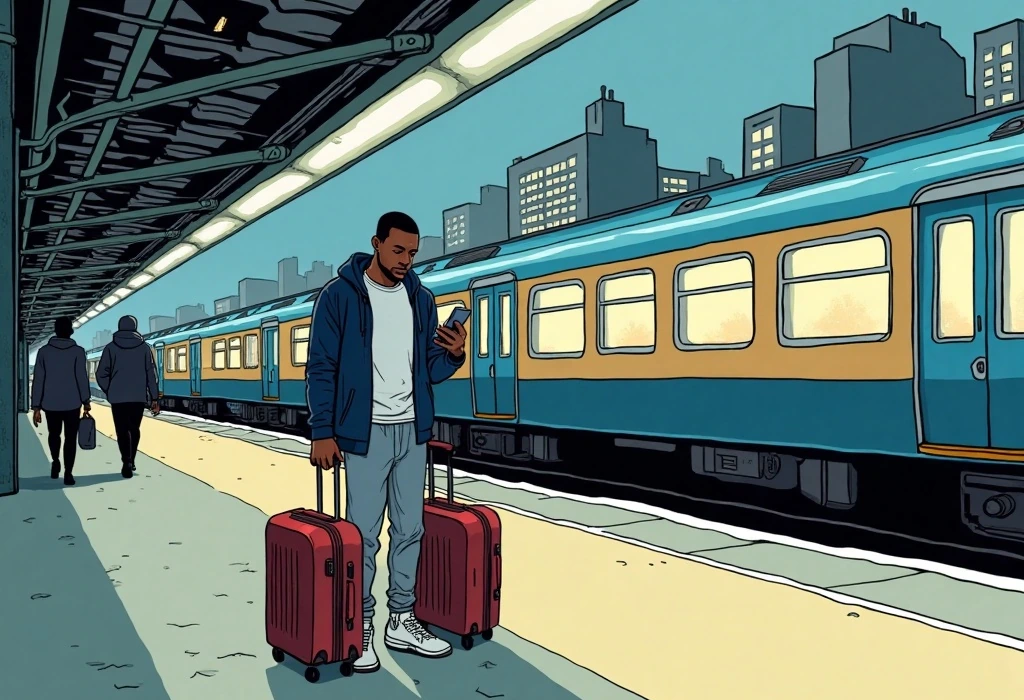
The cold air of Sheffield hit Dayo the moment he stepped off the train from Manchester Airport. Lugging two heavy suitcases across the platform, he pulled his phone from his pocket, watching the battery icon flicker red at four percent. His Nigerian network line had lost service completely, leaving him without data access or banking tokens.
Standing near the ticket barriers, Dayo realized that reaching his rented room required a local bus pass or cab fare in pounds cash, which he had not separated in his rush. 'Dad, I have landed safely in Sheffield, but my phone network is offline here,' he typed into WhatsApp hurriedly before the bar dropped to zero.
The Panic Call from Ibadan
Chief Babatunde calls Dhub Education in panic over his son's arrival message.
Six thousand kilometers away in Ibadan, Chief Babatunde Adebanjo stared at his phone screen in dismay. The abrupt cutoff message from his son triggered an instant wave of anxiety. Without pausing to finish his morning tea, he dialed Kemi Mustapha at the Dhub Education office in Lagos.
'Kemi, good morning. Dayo has arrived in Sheffield, but he says his network is dead and he needs extra cash for immediate transport,' Chief Babatunde said, his voice rising over the speakerphone. 'Did we miss an important expense in his pre-departure checklist?'
Kemi answered calmly, bringing up Dayo's verified arrival checklist on her screen. 'Chief, take a deep breath. Dayo has landed safely. The first forty-eight hours always present minor hiccups with SIM cards and transport, but his budget allocation covers this seamlessly.'
Uncovering the Month-One Ambush
Dayo shows his father a list of unexpected month-one housing setup costs.
By evening, Dayo reached his shared house, but a fresh shock awaited him on the dining table. Beyond his monthly rent, his private landlord was asking for an unexpected security deposit top-up and cash for local utility connections before handing over the main key set.
'They are asking for extra pounds for broadband installation and council tax paperwork,' Dayo explained during a late-night video call, showing his father the handwritten note. 'My initial pocket money is shrinking before my university orientation even starts.'
Chief Babatunde leaned back in his leather armchair, shaking his head in frustration. 'Dayo, we budgeted for rent and groceries. Where are these secondary fees coming from suddenly?'
The Dhub Intervention
Kemi explains student tax exemptions and free banking setup rules to Dayo.
The following morning, Kemi convened a three-way consultation call with Dayo and his father to untangle the first-month ledger line by line. She immediately pointed out key consumer protections and university services that saved the family from unnecessary payments.
'Dayo, as a full-time international student, you are legally exempt from council tax in the UK—do not pay anyone for verification documents,' Kemi explained clearly. 'Furthermore, your university international office issues bank introduction letters free of charge so you can open your UK student account without third-party fees.'
'So I do not need to pay that local housing agent fifty pounds for a bank letter?' Dayo asked, writing down her instructions rapidly.
Settled and Supported
Dayo celebrates his smooth account setups with his relieved father in Ibadan.
Ten days later, Dayo had opened his UK bank account, registered with the campus health center, and activated a budget student mobile plan. The initial fear that had gripped him at the railway station was entirely replaced by structured routines.
'Dad, everything is fully organized now,' Dayo said during their weekly catch-up call, adjusting his hoodie comfortably in his room. 'Kemi’s intervention saved us nearly three hundred pounds in unnecessary setup charges during my first two weeks.'
In Ibadan, Chief Babatunde smiled warmly, placing his hands together in relief. 'That is exactly why we worked with a legitimate advisory team from the start, Dayo. Now focus on your lectures.'
What this story proves: Proper pre-departure planning and experienced professional advice protect international students from unnecessary first-month setup expenses.
Opening Your Bank Account and Mobile Connection
Setting up a local bank account within your first two to four weeks is vital for receiving funds, paying monthly bills, and managing part-time work wages. Most student-friendly banks accept international visas and do not require a national insurance number or social security number to open a basic account. You will need to present your valid passport, student visa, university enrollment letter, and proof of your local residential address.
While waiting for your primary bank account verification, maintain access to emergency cash or dual-currency cards. Simultaneously, transition from airport pay-as-you-go mobile plans to affordable student SIM contracts, which offer discounted data and calling bundles to help you stay connected with family without overspending.
Universities provide dedicated healthcare registration and mental health support services for international students.
Healthcare Registration, Homesickness, and Support Systems
Registering with a local general practitioner (GP) or campus health center should happen during your first two weeks. Healthcare access ensures peace of mind if you fall ill. Furthermore, adjusting to a new academic culture while managing daily chores frequently triggers homesickness and emotional strain. Universities recognize these challenges and provide dedicated counseling services, peer mentorship programs, 24/7 crisis hotlines, and cultural integration workshops.
Seeking support early is a normal part of adjusting to international study. Staying active, building campus routines, and joining student associations significantly ease culture shock. For parents and students navigating this emotional transition, our guide on managing study abroad expectations offers practical strategies for staying aligned while living miles apart.
Frequently asked questions
How much do I need for my first month living expenses in the UK?
International students should budget roughly £900 to £1,300 per month outside London, and £1,300 to £1,400 per month in London. Your first month requires additional emergency buffer funds to cover upfront housing deposits, kitchen essentials, and local transport passes.
How do international students open a UK bank account?
To open a UK bank account, bring your valid passport, student visa documentation, and an official university proof-of-address letter. Most student-friendly banks accept these documents without requiring a local social security or national insurance number.
Do international students pay council tax in the UK?
No. Full-time international students enrolled in eligible university courses in the UK are exempt from paying council tax. You can obtain a council tax exemption certificate directly from your university registrar.
What mental health support is available for homesick students?
Universities offer free or low-cost counseling services through campus student health centers. Students have access to culturally diverse therapists, peer support networks, stress management workshops, and 24/7 crisis hotlines.
Have questions about your own situation?
Every family's paperwork, budget and timeline is different. If you would like a second opinion or help getting started, reach Dhub Education directly:
Planning your study abroad journey requires more than just securing an admission letter; it demands accurate financial preparation for your first ninety days. Contact Dhub Education today to speak with our experienced advisors, review your arrival budget line by line, and ensure a seamless, confident transition into your international university.
Researched and drafted with AI against the sources listed above, then published by Dhub Education. Policies and costs change quickly — always confirm details with the university or the relevant government body before you act.