The 2026 Reality Check: Is UK Study Still Worth It for Nigerian Students?
An honest, numbers-first guide to UK tuition, living costs, and visa rules in 2026. Discover who the UK still works for and when to look elsewhere.
August 19, 2026
11 min read
Dhub Editorial
Short answer: Yes, UK study remains worth it for Nigerian students who target research-based postgraduate degrees or have secure funding to meet the 2026 living costs (£12,000–£18,000/year). However, for those relying on taught master's degrees to bring dependants or expecting low-salary post-study work sponsorship, the shortened 18-month Graduate Route and £38,700 Skilled Worker threshold make other destinations more viable.
The short version
The 2024 dependant ban caused a 68% drop in main applicant visas, but demand has rebounded with a 59% rise in study visas by late 2025.
Living cost requirements have increased, requiring proof of £1,529 per month in London and £1,171 per month outside London.
The Graduate Route visa post-study work allowance will shorten to 18 months for bachelor's and master's graduates applying on or after 1 January 2027.
Transitioning to a Skilled Worker visa now requires a £38,700 minimum salary threshold for most corporate roles.
Research-based postgraduate degrees remain exempt from the dependant visa ban, experiencing a 67% increase in popularity.
The Shifting Landscape of UK Higher Education
As a Nigerian parent or student looking towards the United Kingdom, you are likely asking a critical question: is UK study still worth it for Nigerian students in 2026? The relationship between Nigeria and the UK higher education sector has experienced dramatic shifts over the last few years. Following the pandemic, the market peaked with 65,929 sponsored study visas issued to Nigerians in the year ending June 2022, which was an extraordinary 686% increase compared to 2019. However, subsequent policy tightening reshaped these numbers dramatically.
When the UK government introduced restrictions preventing taught postgraduate students from bringing family dependants, the market experienced a sharp contraction. Main applicant visas granted to Nigerians in the first half of 2024 dropped by 68% to just 4,669. Despite this drop, demand has proven highly resilient. By the year ending December 2025, study visas to Nigerian applicants rose by 59% to 30,204, showing that the structural pull of a British degree remains incredibly strong. Before committing your family's hard-earned resources, you must understand the raw maths of UK study in 2026 to determine if this investment genuinely aligns with your financial reality.
Counting the Cost: Tuition and Living Expenses in 2026
The financial commitment required to study in the UK has reached new heights. For the 2026 academic year, the total annual cost for an international student typically ranges from £35,000 to £62,000. This wide range is driven by your choice of program and location. Undergraduate degrees generally cost between £20,000 and £40,000 per year, while postgraduate courses cost between £15,000 and £35,000, though specialized programs like medicine or executive MBAs easily exceed £60,000 annually.
Beyond tuition, the UK government has strictly updated the maintenance funds you must prove to secure your visa. If you are studying in London, you must show £1,529 per month (£13,761 for a 9-month course). For locations outside London, the requirement is £1,171 per month (£10,539 total). When you add the main applicant student visa fee of £558, these numbers demand meticulous planning. To avoid devastating shortfalls mid-semester, we advise parents to map out a multi-year cash flow forecast before paying any deposit to a university.
Estimated First-Year Budget Scenarios for International Students in the UK (2026)
Scenario
Annual Tuition
Annual Living
Visa & IHS (Upfront)
Year 1 Total
Undergrad in London (Engineering, Imperial)
£40,940
£18,000
£2,886
£61,826
Master's Outside London (Business, Manchester)
£33,100
£13,500
£1,334
£47,934
Undergrad in Scotland (Arts, Edinburgh)
£29,600
£12,000
£3,662
£45,262
Calculating tuition fees and living expenses upfront protects families from unexpected shortfalls.
The Post-Study Runway: Graduate Route and Skilled Worker Reality
Historically, the biggest draw of a UK degree was the post-study work runway. However, the rules are tightening. For graduates applying on or after 1 January 2027, the Graduate Route post-study work visa will be shortened from two years to 18 months for both bachelor's and master's holders. PhD graduates are the only group that will retain their three-year allowance. Additionally, the application fee for this Graduate Route visa has risen to £937, adding another upfront cost to your plan.
While on the Graduate Route, you can work in any sector without a minimum salary. However, transitioning to a long-term Skilled Worker visa has become much more difficult. The standard minimum salary threshold for a Skilled Worker visa has been raised to £38,700 per year, unless you are in exempt health or education roles which carry a lower threshold of £23,200. Given that typical graduate starting salaries hover around £30,000 to £35,000, achieving sponsorship requires exceptional academic performance and strategic networking. Students must treat their 18-month post-study period as an intense job search from day one, rather than a casual transition period.
The Story
A Tale of Two Pathways
Two Port Harcourt families face the shifting landscape of UK university admissions, discovering that the right strategy makes the difference between a devastating visa rejection and a successful family transition.
Tamuno Briggs — father, civil servant in Port Harcourt
Ibim Briggs — daughter, aspiring business student
Adah Amadi — mother, secondary school administrator
Sotonye Amadi — daughter, academic researcher
Tari Princewill — Dhub Education counsellor
The Port Harcourt Parlours
Two families evaluate contrasting advice for their study abroad plans in Port Harcourt.
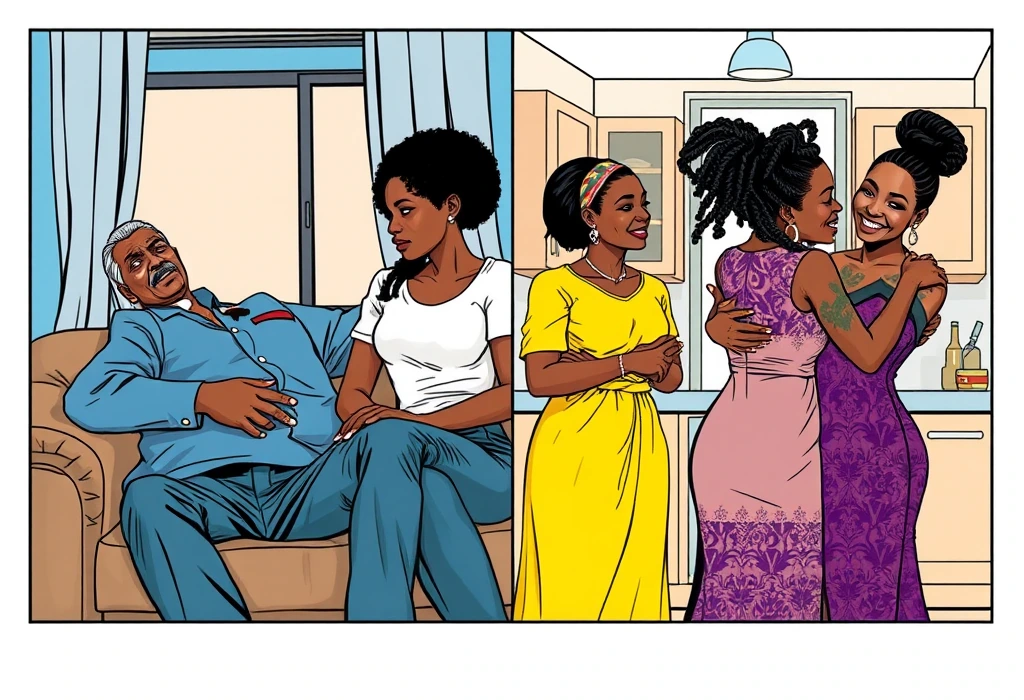
In a brightly lit living room in Port Harcourt, Tamuno Briggs listened to his daughter, Ibim, read from a glossy flyer. "The agent says a taught Master's in Business is the fastest route," Ibim said, her voice rising with hope. Tamuno frowned, shifting in his seat. "Did he mention the new rules? I hear they do not allow families anymore." Ibim waved her hand. "He says that is just for some people. He promised he can bypass it."
Across town, Adah Amadi sat with her daughter, Sotonye, staring at a laptop screen showing a Dhub Education document. "Look at this, Mum," Sotonye said, pointing. "It says taught postgraduates cannot bring dependants, but research-based ones are exempt." Adah nodded slowly, adjusting her glasses. "This matches what we read on the UK government site. No false promises here. Let us go and see this Tari Princewill at Dhub tomorrow."
The Agent's Pitch vs. Tari's Reality
Comparing the high-pressure sales pitch with Dhub's honest, data-backed guidance.
The fan in the unverified agent's cramped office whined as Tamuno and Ibim sat opposite a fast-talking man. "Do not worry about the 18-month post-study limit," the agent laughed, leaning forward. "Once you land, we will convert your visa easily. Just pay the deposit today." Tamuno felt a cold knot in his stomach. "But what about the Skilled Worker minimum salary of thirty-eight thousand seven hundred pounds? Can she get that?" The agent dismissed the question with a wave. "Those are just numbers on paper, my friend."
Meanwhile, in the quiet, air-conditioned office of Dhub Education, Adah and Sotonye sat with Tari Princewill. Tari adjusted his blazer and laid out a clear, printed timeline. "I will not lie to you," Tari said, his voice calm. "If you choose a taught master's, Sotonye cannot bring her husband. But if we target a research-based master's, she can. The research pathway grew sixty-seven percent recently for this exact reason." Adah smiled. "Thank you for the truth."
The Payment Dilemma
The stark difference between a suspicious personal invoice and Dhub's verified payment process.
The sudden silence in the Briggs parlour was heavy as the generator cut out, plunging the room into darkness. Staring at his phone under a torchlight, Tamuno read an invoice from the high-pressure agent. "Ibim, this invoice is just a personal bank account name," Tamuno muttered, rubbishing the paper. "He wants us to transfer millions of Naira tonight. No official receipt, no university portal link. This is how people lose everything." Ibim sat silently, her excitement turning into dread.
At the same moment, Adah and Sotonye were reviewing their official documentation with Tari. He pointed to a secure portal link. "You will pay the university directly through this secure link," Tari explained, handing Adah a stamped Dhub checklist. "And remember, you must show a maintenance fund of eleven thousand seven hundred and one pounds for courses outside London. Our office in the UK will double-check your bank statement before we submit to the Home Office." Adah exhaled, holding the official paperwork tightly.
The Visa Verdict
A devastating rejection contrasts with the joy of a fully compliant, successful application.
Three months later, the Briggs household was in turmoil. Ibim sat on the sofa, her head in her hands, holding a visa rejection letter. "The agent applied for a taught programme and listed my husband as a dependant anyway," Ibim sobbed. "The Home Office caught it instantly. Now we are blocked, and the agent is not answering our calls." Tamuno stood by the window, his face tight with anger. "He took our money and left us to carry the blame."
Across the city, Sotonye burst into her mother's kitchen, waving a thick brown envelope. "Mum, it is here! My visa is approved for the research master's in Edinburgh!" Adah dropped her wooden spoon, wrapping Sotonye in a tight hug. "God be praised! No shortcuts, no lies. Tari's team guided us through every document." Sotonye beamed. "And my husband's dependant visa is approved too. We are going together, legally."
The Path Restored
Determined to restart correctly, while the Amadis celebrate their secure international transition.
Tamuno sat in his quiet parlour, holding a crumpled refund slip that was fifty percent short of what he had paid the roadside agent. "We must start again, Ibim," he said quietly, looking at his daughter's downcast face. "But this time, we do it right. No more unverified promises." Ibim nodded, wiping her eyes. "I saw Sotonye's post today. She said Dhub Education helped them verify every single document and university fee from day one."
At the Dhub office, Adah and Sotonye presented Tari with a small box of homemade chin-chin as a token of their appreciation. "You saved us from a devastating, costly mistake, Tari," Adah said, her voice filled with deep gratitude. Tari smiled warmly, accepting the gift. "We only showed you the real path and kept the paperwork straight. Sotonye did the hard work. Our team in the UK is already waiting to welcome her." Sotonye laughed, clutching her visa, her future finally secure.
What this story proves: Taking unverified shortcuts on visa regulations leads to financial ruin, while transparent, compliant planning guarantees long-term family success.
The Strategic Pivot: Who the UK Still Works For
With these stricter regulations, the UK is no longer a one-size-fits-all destination. However, it still works brilliantly for specific profiles. First, it is highly viable for students targeting research-based postgraduate degrees. Taught postgraduate courses saw a 39% year-on-year collapse due to the dependant ban, but research-degree enrolments surged by 67% because they remain exempt from the dependant visa restrictions. If you must travel with your family, a research master's or PhD is your legal pathway.
Second, the UK remains an excellent fit for single, career-focused students who have secured scholarships or have strong independent financial backing. If your goal is high-quality education and you do not rely on immediate post-graduation sponsorship to service family debts back home, the prestige of a UK degree is undeniable. For families seeking more budget-friendly paths, it is worth exploring cheaper alternatives to studying in the UK before making your final decision.
Partnering with verified advisors ensures compliance with the latest UK Home Office regulations.
The Ultimate Verdict: Is UK Study Still Worth It for Nigerian Students?
Ultimately, is UK study still worth it for Nigerian students? The answer depends entirely on your strategy and the transparency of the advice you receive. Unverified agents often paint an outdated picture, promising easy work visas and ignoring the 18-month Graduate Route restriction. To protect your family from fraud, you must learn how to verify the credentials and fee structures of anyone handling your application. Some agents operate on commissions from specific universities, but you should always ask any agent—including Dhub Education—to provide their complete fee structure in writing before making any payment.
If you have the financial runway to support the updated maintenance fees and are realistic about the highly competitive job market, a UK degree is a powerful global asset. However, if your budget is tight and you rely on bringing dependants on a taught course, you should look elsewhere. We highly recommend using our one-afternoon agent safety checklist to audit your study-abroad plans and ensure you are making decisions based on cold, hard facts rather than agent hype.
Frequently asked questions
How much does it cost to study in the UK in 2026?
Total annual costs typically range from £35,000 to £62,000. This estimate combines tuition fees—which range from £20,000 to £40,000 per year for undergraduate programs and £15,000 to £35,000 for postgraduates—and annual living expenses ranging from £12,000 to £18,000.
What are the updated monthly maintenance fund requirements for a UK student visa?
To secure your student visa, you must show proof of maintenance funds. For universities located inside London, the requirement is £1,529 per month (totaling £13,761 for a 9-month period). For institutions located outside London, you must show £1,171 per month (totaling £10,539 for 9 months).
Can postgraduate students still bring family dependants to the UK?
Under the current rules, only students enrolled in postgraduate research-oriented programmes (such as a research master's or PhD) are exempt and allowed to bring spouses and children on sponsored dependant visas. Students enrolled in taught postgraduate programmes are banned from bringing dependants.
How long can I stay in the UK under the Graduate Route post-study work visa?
For bachelor's and master's graduates applying on or after 1 January 2027, the Graduate Route visa allows a stay of up to 18 months. PhD graduates are exempt from this reduction and retain their three-year allowance.
Researched and drafted with AI against the sources listed above, then published by Dhub Education. Policies and costs change quickly — always confirm details with the university or the relevant government body before you act.