Study Abroad Alternatives for Nigerian Students on a Budget
Exhausted by UK tuition hikes? Explore high-quality, affordable alternatives in Germany, Ireland, and Malta with low fees and strong post-study work rights.
October 10, 2026
10 min read
Dhub Editorial
Short answer: The best study abroad alternatives for Nigerian students on a budget include Germany, where public universities are tuition-free, and Malta, which offers significantly lower living costs than the UK. Ireland provides excellent value with tuition often lower than the UK and post-study work rights of up to 24 months for Master's graduates.
The short version
Germany offers tuition-free education at public universities for all international students, regardless of nationality.
Ireland's Stamp 1G visa allows Master's graduates to stay and work for up to 24 months after their studies.
Malta and North Cyprus offer internationally accredited degrees at a fraction of the cost of traditional English-speaking destinations.
Poland and Hungary provide budget-friendly European degrees with tuition ranging from €1,800 to €5,000 per year.
Verification of accreditation and visa requirements is more complex in these regions, making professional guidance essential.
Why Nigerian Families are Looking Beyond the UK
For decades, the path from Lagos or Abuja to London was the standard for Nigerian families. However, 2026 has brought a shift in the calculation. Between tightening UK dependant rules and the rising cost of living in British cities, many parents are asking if the 'prestige' of a UK degree is worth the financial strain. The reality is that the best country to study abroad is the one that aligns with your specific financial capacity and long-term goals, not just the one most of your peers are choosing.
Skeptical parents are right to be cautious. You have likely seen agents promise 'guaranteed visas' only to disappear when the bank statement doesn't meet the UK's rigid 28-day rule. This is why we are seeing a massive surge in interest in study abroad alternatives for Nigerian students on a budget—destinations where the quality of education remains high but the entry price is manageable. This guide explores the credible options where your Naira goes further.
Germany: The King of Tuition-Free Education
Germany remains the most significant alternative for those prioritising low costs. Public universities in Germany charge zero tuition fees to all students, including Nigerians. You are only responsible for a small semester contribution and your own living expenses. This means a three-year German degree can cost less than a single year of tuition in the UK.
However, the catch is the 'Blocked Account.' To get your visa, you must prove you can support yourself by placing a set amount of money into a restricted German bank account. While this is a high upfront cost, the money belongs to you and is released monthly for your rent and food. Institutions like Freie University of Berlin even offer English-taught programmes, though they are highly competitive. Navigating these applications requires precision; a single missing document can lead to an immediate rejection. This is where looking beyond a single destination becomes a strategic advantage.
Comparison of Study Abroad Alternatives for Nigerian Students (2026)
Country
Average Tuition
Language
Post-Study Work
Germany
€0 (Public Univ.)
English/German
18 Months
Ireland
€10,000 - €15,000
English
24 Months (Master's)
Poland
€1,800 - €3,000
English/Polish
9 - 12 Months
Malta
Moderate Fees
English
Available
Hungary
€3,000 - €5,000
English/Hungarian
Available
Professional guidance is the difference between a rejected application and a successful career.
Ireland: The Underestimated Value Gem
If you prefer an English-speaking environment without the UK's price tag, Ireland is the most strategic choice in 2026. It is often underestimated by Nigerian families, yet it offers world-class education at a fraction of the cost. More importantly, Ireland’s Third Level Graduate Programme (Stamp 1G) allows non-EU graduates of a Master’s degree to stay and work for up to 24 months without a prior job offer.
This post-study work right is a vital bridge to a Critical Skills Employment Permit. Unlike the UK, where rules have become more restrictive, Ireland remains welcoming to international talent in sectors like tech, healthcare, and finance. For many families, the combination of English instruction and clear career pathways makes Ireland the most logical 'middle ground' between the expensive UK and the linguistically challenging Germany.
The Story
The Voice Note from Dublin
When the UK's financial requirements feel like a wall, the Okafor family discovers that a strategic pivot to Ireland isn't a backup plan—it's a better investment.
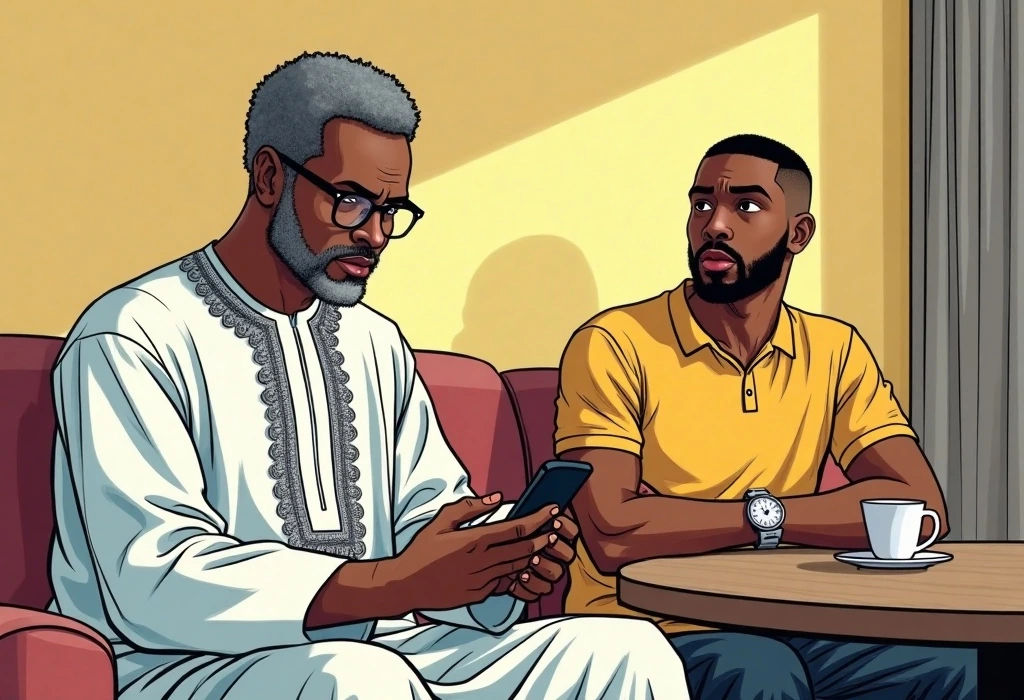
Mr. Emeka Okafor — Father and senior civil servant in Enugu
The late-night pressure of shifting UK policies causes tension in the Okafor household.
The family's WhatsApp group, 'Okafor Excellence', was buzzing at 11:00 PM. Aunty Ngozi had forwarded yet another broadcast from London. 'Emeka, did you see this? The UK has changed everything again. If Uche is coming, you need to show the full money for twenty-eight days, no stories! The Naira is falling, you must hurry!'
Mr. Emeka Okafor sat in his living room in Enugu, the glow of his phone illuminating his worried face. He looked at the exchange rate on his laptop and then at his savings. The numbers didn't move the way he needed them to. 'Ngozi, I have heard you,' he typed, his thumbs heavy. 'But the wall is getting too high. We are looking for a door, not just a wall to climb.'
Uche, watching from the dining table, felt the weight of his father's silence. He knew his father wanted the best, but the 'best' was starting to feel like a financial trap. 'Dad,' Uche said quietly, 'maybe the UK isn't the only door. I've been talking to someone who says there are other ways.'
The Budget on the Table
Emeka reviews the daunting costs of a UK education for his son.
The next morning, the dining table was covered in printouts. Emeka had calculated the UK tuition, the NHS surcharge, and the proof of funds. The total was staggering. 'Uche, even if I sell the plot in the village, we are barely touching the surface,' Emeka sighed, rubbing his eyes behind his wire-rimmed glasses. 'And Ngozi says you can't even bring your brother later if you wanted to.'
'I invited someone to the group chat, Dad,' Uche said, gesturing to his phone. 'Her name is Sarah from Dhub Education. She doesn't just do UK. She told me about Ireland and Germany. She said we should stop looking at where everyone is going and look at where the value is.'
Emeka was skeptical. He had heard of 'consultants' before who took fees and gave nothing but fake admission letters. 'Is she one of those agents in a container?' he asked. Uche shook his head. 'No, she sent me her office address in Lagos and her LinkedIn. She’s already waiting for us to ask the hard questions.'
The Counsellor Joins the Chat
Sarah Adebayo introduces the family to the strategic advantages of studying in Ireland.
Sarah Adebayo joined the WhatsApp group with a professional greeting. Unlike Aunty Ngozi's frantic broadcasts, Sarah's messages were calm and structured. 'Good morning, Mr. Okafor. I understand the UK figures are looking difficult. Many of my families are in the same position. Have you considered the Republic of Ireland?'
Emeka typed back quickly. 'Is that not just more of the same? Pounds and high fees?' Sarah replied with a PDF. 'Actually, Ireland uses the Euro. Tuition for a Master's in Engineering can be €4,000 to €6,000 less than the UK average. And the best part? The Stamp 1G visa. It gives Uche two years to work after his degree without needing a sponsor immediately.'
Aunty Ngozi chimed in from London. 'But Sarah, is there work there? Everyone is here!' Sarah didn't miss a beat. 'The tech and engineering sectors in Dublin are booming, and they are actively looking for international graduates. It’s a different path, but for Uche’s career, it’s actually more stable than the current UK route.'
The Proof of Facts
Sarah explains the clear, documented requirements for Irish and German student visas.
Emeka was still wary. 'And what about the visa? I've heard the Irish embassy is even tougher.' Sarah sent a voice note, her tone steady and reassuring. 'They are thorough, Mr. Okafor, not tough. They want to see that the money is there and the intention is real. Because we work with the specific Irish institutions, we know exactly how to structure your documentation.'
She continued, 'For Germany, which is another option, the tuition is zero, but you need a Blocked Account of about €11,904. For Ireland, we can find a balance that fits your current savings without you having to sell your land. I will put the full comparison in writing for you by this afternoon, including the accreditation of each school.'
Emeka looked at Uche. For the first time in weeks, the boy looked hopeful rather than burdened. 'Sarah,' Emeka typed, 'send the document. If the maths adds up and the accreditation is real, we will move. I am tired of chasing ghosts in the UK.'
The Pivot to Dublin
The Okafor family celebrates a realistic and secure plan for Uche's future in Ireland.
Two weeks later, the Okafor dining table looked different. The UK brochures were gone, replaced by a structured application plan for two top universities in Ireland. Sarah had already verified Uche's transcripts and started the pre-assessment. 'Dad, look at this,' Uche said, pointing to the post-study work details. 'I can actually build a career there, not just do odd jobs.'
Emeka nodded, a rare smile appearing. 'Ngozi called again today. She was surprised when I told her about the Stamp 1G visa. She didn't even know it existed. She’s still telling people to come to London and 'figure it out.' I told her we are not figuring anything out. We have a plan with Dhub.'
Sarah's final message of the day popped up: 'The application for the first choice is in. We have the receipt from the university portal. No shortcuts, Mr. Okafor. Just the process.' Emeka leaned back, feeling the tension in his shoulders finally dissipate. They weren't just following the crowd anymore; they were making a move that actually made sense.
What this story proves: Prestige is no substitute for a sustainable budget and a clear legal pathway to employment.
Malta, Poland, and Hungary: High Value, Low Cost
For families on a strictly modest budget, Southern and Eastern Europe offer surprising quality. Malta, for instance, provides European-standard degrees with living costs significantly lower than those in Northern Europe. In Eastern Europe, countries like Poland and Hungary are fast-growing destinations. In Poland, average tuition fees range from €1,800 to €3,000 per year, while Hungary sits between €3,000 and €5,000.
While these countries offer excellent value, the visa processes can be intricate. Polish and Hungarian embassies require very specific documentation regarding your academic history and financial standing. It is easy to get lost in the translation of requirements, which is why we recommend consulting a guide to UK alternatives before paying any deposits. These regions are ideal for students who are independent and ready to adapt to a new cultural landscape while keeping their debt levels at zero.
Top-tier European universities offer world-class education at a fraction of the UK's cost.
The Practical Path Forward for Nigerian Families
Choosing an alternative destination is a practical business decision, not a compromise on quality. However, the 'unseen' costs—visa processing fees, translation of documents, and finding verified accommodation—can trip up families who try to do it all alone. A common mistake is assuming that because tuition is free in Germany, the visa is 'easy.' In reality, the scrutiny of Nigerian documents is often higher in these jurisdictions precisely because the tuition is so low.
Before you commit to a country, you must verify the accreditation of the university and the specific post-study work rights available for your course. This is where Dhub Education steps in. We don't just 'process' applications; we help you build a financial framework that works for your family's reality. Whether it is understanding the 2026 proof of funds requirements or choosing between Dublin and Berlin, we provide the documented truth that skeptical parents need to make a safe investment.
Frequently asked questions
Is studying in Germany really free for Nigerians?
Yes, public universities in Germany charge no tuition fees to any international students. However, you must pay a semester contribution (usually €150–€400) and prove you have sufficient funds for living expenses through a Blocked Account, which requires approximately €11,904 per year.
How long can I stay in Ireland after my studies?
Under the Third Level Graduate Programme (Stamp 1G), non-EU graduates who complete an Honours Bachelor’s degree can stay for 12 months, while those with a Master’s or PhD can stay for up to 24 months to look for work without a prior job offer.
Which is the cheapest country in Europe for Nigerian students?
Germany is often the cheapest due to zero tuition at public universities. However, countries like Poland and Hungary offer very low tuition (€1,800–€5,000 per year) and significantly lower living costs than Germany or the UK.
Can I work while studying in Malta?
Yes, international students in Malta are generally allowed to work part-time (up to 20 hours per week) after their first 90 days of study, provided they maintain their academic standing.
Have questions about your own situation?
Every family's paperwork, budget and timeline is different. If you would like a second opinion or help getting started, reach Dhub Education directly:
Don't let high UK fees end your study abroad journey. Talk to a Dhub Education counsellor today to explore verified, budget-friendly alternatives in Ireland, Germany, and beyond. We help you build a plan that your family can actually afford.
Researched and drafted with AI against the sources listed above, then published by Dhub Education. Policies and costs change quickly — always confirm details with the university or the relevant government body before you act.