How to Choose a Study Abroad Country from Nigeria: 5 Reasons to Look Beyond a Single Destination
Stop fixating on one country. Learn how to choose a study abroad country from Nigeria by comparing tuition, Schengen mobility, and work rights across Europe.
September 12, 2026
12 min read
Dhub Editorial
Short answer: To choose a study abroad country from Nigeria, look beyond single-destination pathways like the UK or US. Evaluate mainland Europe as a unified region where a single student visa unlocks fee-subsidised degrees, the 29-country Schengen travel area, aligned academic credits, and diverse post-study work regulations tailored to your budget.
The short version
Schengen residence permits grant visa-free travel across 29 European countries for up to 90 days in any 180-day period.
Tuition fees in mainland Europe are heavily subsidised, with English-taught options starting from as low as €130 per semester.
The Bologna Process ensures that academic credits are fully transferable across 49 countries, easing credit transfers and exchanges.
Part-time work rules vary, ranging from 15 to 20 hours weekly, with some countries requiring a separate work permit.
A structured, professional advisory process is essential to navigate country-specific visa paths and financial requirements safely.
The Single-Country Obsession: A Costly Trap for Nigerian Families
For years, Nigerian families looking to secure an international education have followed a predictable, well-trodden path. The default strategy has been to fixate entirely on a single English-speaking destination, usually the United Kingdom. However, recent policy shifts, skyrocketing exchange rates, and aggressive changes to dependant visas have left many parents stranded. When you are looking at the 2026 reality of UK study, it becomes clear that relying on a single country is a high-risk gamble. Understanding how to choose a study abroad country from Nigeria requires a fundamental shift in perspective: you must begin looking at Europe as a whole rather than a collection of isolated borders.
Skeptical parents have every right to be cautious. Traditional agents often push a single, expensive country because it serves their own interests, not your family budget. By widening your search to mainland Europe, you open up access to world-class public institutions, significantly lower cost structures, and unparalleled regional flexibility. Here are five practical, data-backed reasons why looking at Europe as a unified educational region is the smartest financial and academic move you can make this year.
1. Unrivalled Regional Mobility Across 29 Schengen Countries
When you secure a student visa for a mainland European nation, you are not just buying a ticket to one country; you are unlocking an entire continent. Under current immigration frameworks, an international student holding a valid residence permit in any Schengen state can travel freely to other member states without applying for additional visas. According to academic analyses on regional integration, the Schengen Area comprises 29 countries with no internal border controls, allowing students to travel for up to 90 days within any 180-day period on their single residence permit.
For a Nigerian student, this level of free movement is life-changing. A student based in Germany or France can board a budget flight or a train during the weekend to attend networking events, industry conferences, or cultural exhibitions in Belgium, Italy, or Spain. This regional access turns a single academic base into a gateway to dozens of distinct cultures and labour markets. Instead of being confined to one island nation, your child builds a truly continental network before they even graduate.
Comparison of Select Affordable European Destinations for International Students
Country
Estimated Tuition Costs
Weekly Part-Time Work Limit
Separate Work Permit Required?
Norway (e.g., Nord University)
~€725 (~$800) per semester
20 hours per week
Yes
France (e.g., Paris-Sud)
~€170 (~$190) per semester
20 hours per week
No
Germany (e.g., Würzburg)
~€130 (~$145) per semester
140 full days per year
No
Lithuania (e.g., Vilnius Tech)
From €3,500 per year
20 hours per week
Yes
Netherlands (e.g., HU Utrecht)
~€10,372 per year
16 hours per week
Yes
High-quality, English-taught programmes are widely available across mainland Europe.
2. Academic Flexibility and Aligned Global Credentials
One of the major worries for Nigerian parents is whether a degree from a lesser-known European country will be recognised back home or internationally. This is where the Bologna Process comes in. This landmark agreement aligns higher education systems across 49 countries, ensuring that credits and degrees are perfectly comparable and transferable. If your child starts a bachelor's degree in Lithuania, their credits are fully recognised if they choose to pursue a master's degree in Germany or work in France.
This structural alignment also unlocks massive regional funding. The widely recognised Erasmus+ framework funds academic mobility at scale, enabling students to spend exchange semesters or short research stays in different countries. Furthermore, international experience has a direct, measurable impact on career trajectories. Data from the Forum on Education Abroad reveals that graduates who completed part of their studies overseas earned an average of 6.3 percent higher starting salaries than those without international experience. Employers highly value the adaptability and intercultural communication skills gained by navigating multiple European systems.
The Story
The Continental Shift
A Lagos father struggling with the crushing costs of a UK visa discovers that a single European strategy can save his family millions.
Mr. Biodun Alao — Father, a mid-level civil servant in Lagos
Korede Alao — Son, an aspiring biology student
Mrs. Ronke Alao — Mother, a high school principal visiting Abuja
Deji Solanke — Dhub Education counsellor
The Impossible Target
Biodun debates the soaring costs of the UK pathway with Ronke.
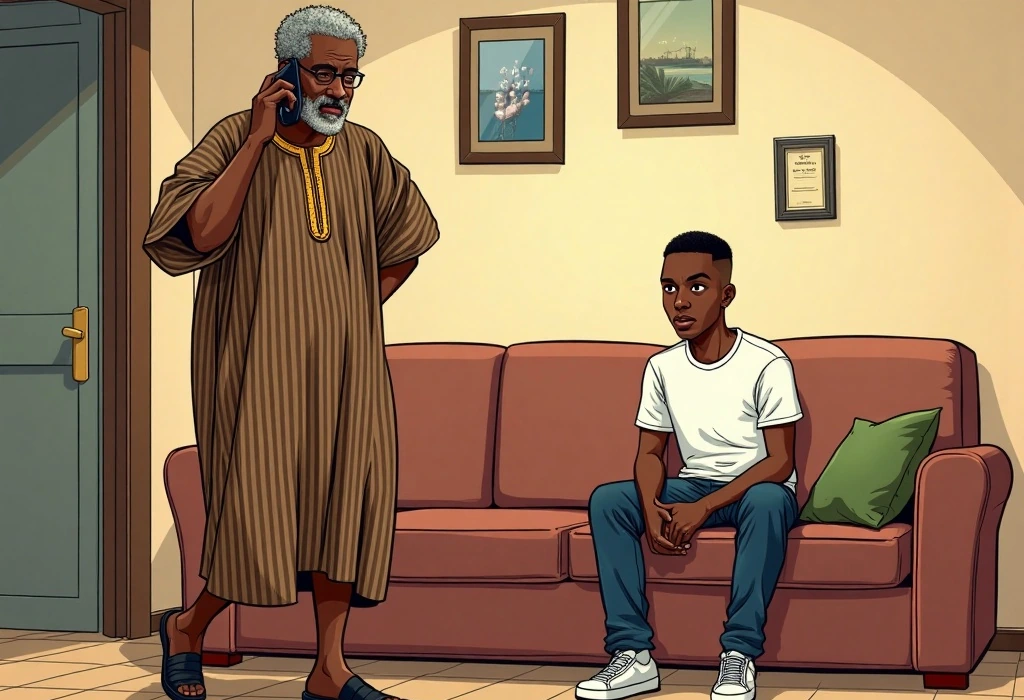
The living room generator hummed loudly outside, but the noise inside the house was far more intense. Mr. Biodun Alao paced across the tiled floor, his phone pressed tightly to his ear. On the line was his wife, Ronke, speaking from her sister's house in Abuja. Beside Biodun, nineteen-year-old Korede sat on the edge of the sofa, staring at the floor with his hands clasped between his knees.
"Ronke, I am looking at the bank statements again," Biodun said, his voice tight. "The agent in Ikeja is insisting we must show thirty-five million Naira in the account for the UK visa proof of funds. Where is that money coming from? Are we going to sell the family land in Oyo?"
"We cannot sell that land, Biodun," Ronke replied over the crackling network. "But Korede's friends are all preparing to leave. We promised him this. Let us ask the agent if there is another way, perhaps a loan company they use."
The Alternative Counsel
Biodun shares the alternative European strategy with Ronke.
Three weeks later, the afternoon heat hung heavy over Lagos. Biodun sat in his office, staring at a fresh spreadsheet on his laptop. He picked up his phone and dialled Ronke. His voice was no longer tense; instead, it carried a quiet, focused energy that made Ronke sit up straight in her Abuja room.
"Ronke, I did not go back to that Ikeja agent," Biodun said. "I went to Dhub Education. I met a counsellor named Deji Solanke. He didn't try to sell me a quick loan or tell me to ignore the rules. He looked at our budget and asked me a simple question: 'Why are you locking your son into one expensive country when Europe is open?'"
"Europe?" Ronke asked, sounding deeply skeptical. "We do not speak French or German, Biodun. How will the boy cope? Is this not another agent trick to send him to a village where there are no jobs?"
The Hard Numbers
Deji Solanke breaks down the real costs of the Norwegian pathway.
The next week, Biodun and Korede sat in the cool, quiet office of Dhub Education. Deji Solanke leaned forward, spreading out several official university data sheets across the desk. His expression was calm, direct, and completely devoid of the usual high-pressure sales pitch. He pointed to the top sheet, showing the logo of Nord University in Norway.
"Mr. Alao, let us look at the actual facts," Deji said, gesturing to the paper. "Nord University offers a world-class degree in Biology taught fully in English. The tuition fee is around seven hundred and twenty-five Euros per semester. In Naira, that is just over one point two million. Compare that to seventeen million Naira a year in the UK."
Korede leaned in, his eyes wide. "And the visa, sir? Do we need to prove thirty-five million Naira?"
"No, Korede," Deji explained. "The Norwegian financial requirement is much lower and completely structured. More importantly, your residence permit allows you to travel freely across twenty-nine Schengen countries. You are not stuck in one place."
The Breakthrough Call
Ronke receives the news of Korede's successful admission.
Four weeks after their meeting with Deji, Ronke was back in Lagos, standing in the bustling Balogun market. The noise of shouting traders surrounded her, but she barely heard any of it. She held her phone tightly to her ear, her face glowing with a massive smile as she listened to Biodun's voice.
"Ronke, it is approved!" Biodun shouted over the line. "The admission letter from Nord University just dropped. Dhub verified every document, and the university has accepted Korede for the Biology programme. The tuition invoice is exactly what Deji promised: seven hundred and twenty-five Euros."
"Oh, thank God!" Ronke gasped, leaning against a fabric stall. "No land sold, no fake loan companies, and no sleepless nights. We are paying the real university directly. Is this actually happening?"
"It is real," Biodun said, his voice thick with emotion. "Korede is going to Norway, and he has the whole of Europe in his hands."
The Airport Goodbye
The Alao family celebrates a legitimate, affordable path to Europe.
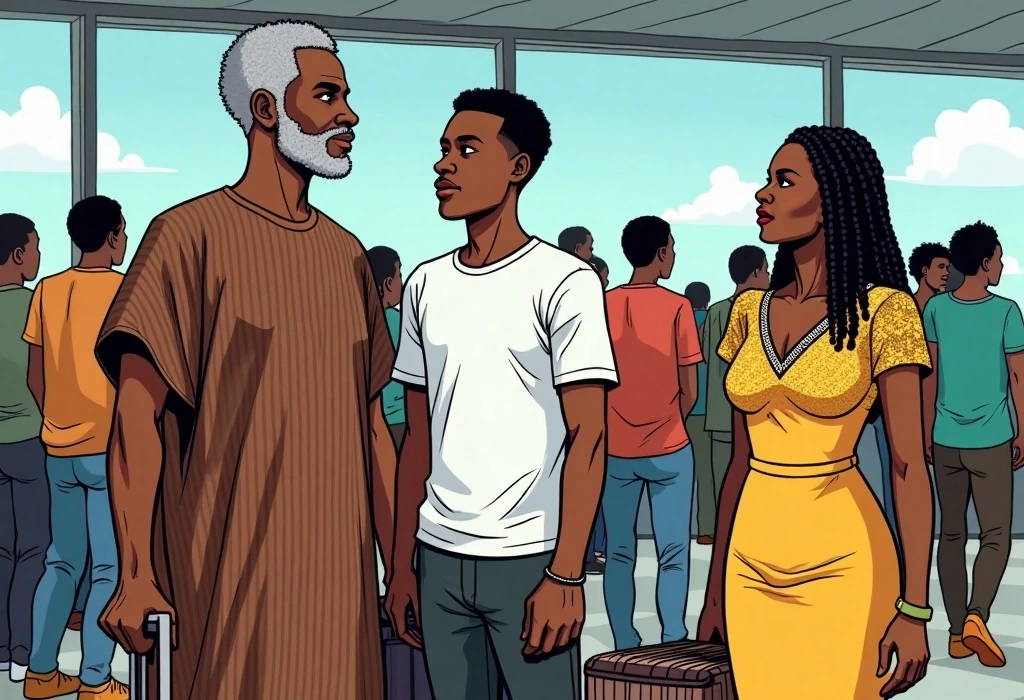
The departure hall at Murtala Muhammed International Airport was packed with families saying emotional farewells. Korede stood next to his luggage trolley, holding a small document holder containing his passport and his new Norwegian residence permit. Biodun and Ronke stood close to him, their hands on his shoulders.
"Remember what Deji told you, Korede," Biodun said, his voice steady but warm. "Your classes are in English, but use your weekends to learn. This single permit in your hand is a key to twenty-nine countries. Travel, network, and keep your head down."
"I will, Dad," Korede said, hugging his mother tightly. Ronke smiled through her tears, adjusting his collar.
"We did this the right way, Biodun," Ronke whispered as Korede walked toward the security gates. "No shortcuts, no lies. Just the truth."
What this story proves: Looking beyond a single popular destination to explore regional European options can save your family millions while unlocking vastly superior mobility and career opportunities.
3. Mind-Boggling Cost Savings on Tuition and Living Expenses
Let us look at the raw numbers. While a standard UK or US university can easily cost upwards of £20,000 (approximately 34,000,000 NGN) per year in tuition alone, public universities in mainland Europe are heavily subsidised by host governments. This keeps costs remarkably low for international students. To understand the true range of options, families should explore the cheapest countries to study abroad for Nigerians, where the financial contrast is stark.
Mainland Europe offers unmatched cultural exposure and academic mobility.
4. English-Taught Programmes are Rapidly Expanding
A common misconception that stops Nigerian families from exploring mainland Europe is the language barrier. Many believe their children must learn German, French, or Polish to a native standard before they can attend classes. While learning the local language is highly beneficial for daily life and local integration, it is no longer a prerequisite for academic admission.
5. Navigating Diverse Part-Time Work Rights and Post-Study Pathways
A critical step in learning how to choose a study abroad country from Nigeria is assessing how much your child can earn to offset their living costs. Work rights vary widely by country, and understanding these differences is vital to avoid visa violations. Generally, international students in Europe are allowed to work part-time during the term, but the specific hourly limits and permit requirements depend entirely on local national laws.
For instance, most European nations limit students to about 20 hours of work per week during term time, allowing full-time work during official holiday periods. However, there are notable exceptions: Luxembourg limits students to 15 hours, while the Netherlands restricts them to 16 hours per week. In contrast, Germany permits international students to work up to 140 full days (or 280 half days) per year. Furthermore, eight European nations—including Spain, the Netherlands, Slovenia, Norway, Malta, Luxembourg, Iceland, and Cyprus—require non-EU students to obtain a separate work permit in addition to their student visa. In countries like Austria, Belgium, and Italy, the student residence permit itself confers the right to work. Navigating these fragmented rules is complex, which is why having an experienced guide is so important. For a complete look at affordable global alternatives, you can read our ultimate guide to UK alternatives.
Frequently asked questions
Can my child really study in English in mainland Europe?
Yes. There are over 500 universities in Europe offering more than 4,000 English-taught bachelor's programmes, particularly in fields like business, technology, and sciences. While learning the local language is useful for daily life, it is not required for academic admission.
How much are the tuition fees at cheap European universities?
Tuition is highly subsidised. For example, Nord University in Norway charges around €725 per semester, the University of Paris-Sud in France charges a processing fee of €170 per semester, and public universities in Latvia and Lithuania start from $1,695 per year.
Can international students work while studying in Europe?
Yes, most European countries allow students to work part-time, typically capped at 20 hours per week during term time and full-time during holidays. However, some countries like Spain, Norway, and the Netherlands require a separate work permit, while others do not.
What is the Schengen travel benefit for international students?
A student residence permit issued by any of the 29 Schengen countries allows the holder to travel freely to any other Schengen state for up to 90 days within any 180-day period without needing to apply for another visa.
Have questions about your own situation?
Every family's paperwork, budget and timeline is different. If you would like a second opinion or help getting started, reach Dhub Education directly:
Choosing the right country and navigating varying work rights and visa pathways is incredibly difficult to do alone. At Dhub Education, we help Nigerian families identify the most secure, budget-friendly European routes and handle the complex admission process step-by-step. Contact us today for a personalized consultation and let us build a realistic pathway for your child's global future.
Researched and drafted with AI against the sources listed above, then published by Dhub Education. Policies and costs change quickly — always confirm details with the university or the relevant government body before you act.