Is Studying in Germany Free for Nigerian Students? The Honest 2026 Reality Check
Discover the truth about tuition-free German public universities, the mandatory €11,904 blocked account, part-time work rights, and who will actually succeed in Germany.
September 7, 2026
10 min read
Dhub Editorial
Short answer: Yes, studying in Germany is tuition-free for Nigerian students at public universities, requiring only a semester contribution of €100 to €500. However, students must prove financial self-sufficiency by depositing €11,904 into a German blocked account to cover their living expenses before applying for a student visa.
The short version
Public German universities charge zero tuition, requiring only a minor semester contribution of €100 to €500 that usually includes a transit pass.
The primary financial hurdle is the mandatory blocked account (Sperrkonto), which requires a deposit of €11,904 for the 2026 academic year.
International students are legally allowed to work 140 full days or 280 half days per calendar year to support themselves.
Graduates of German universities are entitled to an 18-month post-study job-seeker permit to find a career related to their degree.
Germany is ideal for independent, academically strong students willing to learn the local language, but will frustrate those looking for an easy, English-only ride.
Is Studying in Germany Free for Nigerian Students? The Tuition Truth
Many Nigerian families ask: is studying in Germany free for Nigerian students? The short answer is yes, but only if you secure admission into a public university. Unlike destinations like the UK or Canada, German public universities charge zero tuition fees for international students. Instead, you only pay a mandatory semester contribution that ranges from €100 to €500 per semester. This fee is not tuition; it covers administrative costs and often includes a regional public transport pass.
However, private German institutions operate differently, charging between €5,000 and €20,000 annually. If you are comparing your options and looking for the cheapest countries to study abroad, German public universities are incredibly attractive, but you must understand that 'free tuition' does not mean your entire journey is free of cost.
The Blocked Account (Sperrkonto) Reality Check
The biggest financial hurdle for Nigerian families planning a German education is the blocked account, known locally as a Sperrkonto. To qualify for a student visa, you must prove you can afford to live in Germany. For the 2026 academic year, the German government has set the standard blocked account deposit at €11,904 for the entire year. This translates to roughly 20 million Naira depending on the prevailing parallel market exchange rates.
This money is not a payment to the school or the government; it remains your money. Once you arrive in Germany, the bank releases exactly €992 per month to your standard bank account to cover your rent, health insurance, and feeding. Note that for certain alternative pathways, such as language school or apprenticeship visas, the required deposit increases by 10% to €13,094.40, allowing a monthly payout of €1,091.20.
Comparison of German Public and Private Universities
Feature
German Public Universities
German Private Universities
Annual Tuition Fees
€0 (Tuition-Free)
€5,000 to €20,000
Semester Contribution
€100 to €500
Varies (often included in tuition)
Required Blocked Account (2026)
€11,904
€11,904
Post-Study Work Permit Duration
Up to 18 months
Up to 18 months
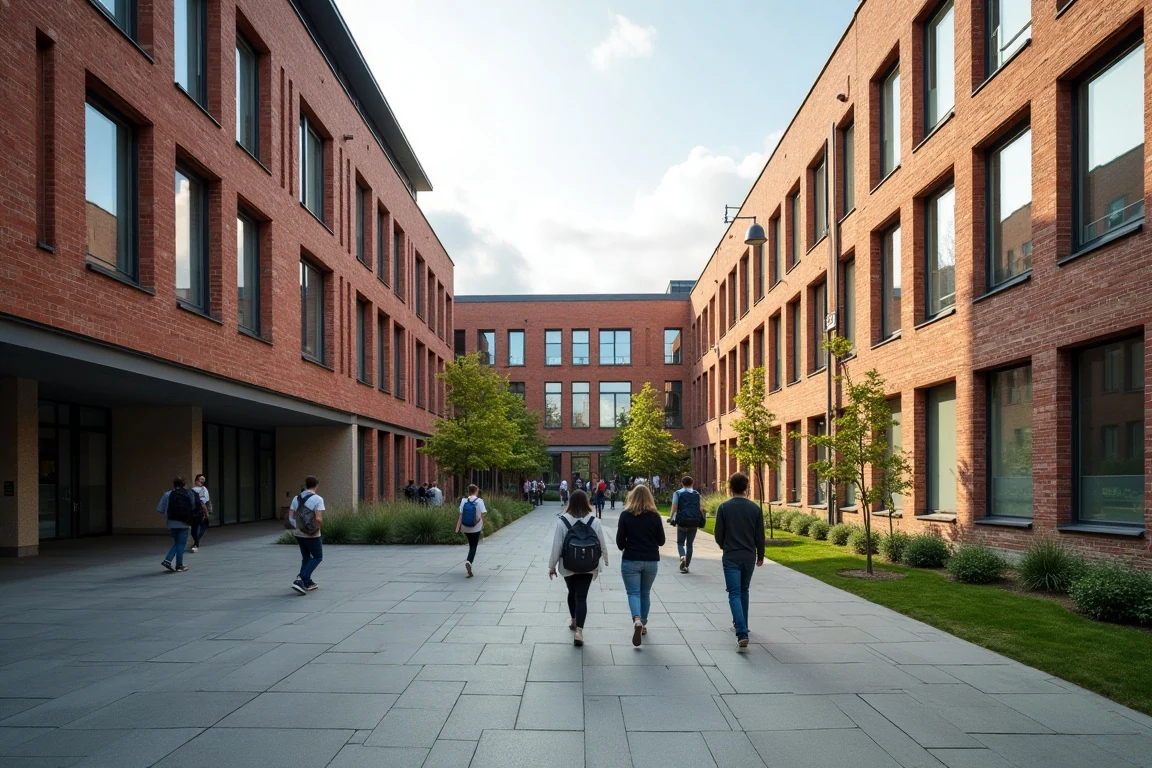
German public universities offer world-class, tuition-free education.
Working While Studying: The 140-Day Rule
Can you work to offset your living expenses in Germany? Yes, but within strict legal limits. Under rules updated recently, international students can work 140 full days or 280 half days per calendar year without requiring approval from the Federal Employment Agency. Alternatively, you can work up to 20 hours per week during the lecture period and unlimited hours during semester breaks.
While this part-time work is excellent for covering your day-to-day pocket money, you cannot use it to build your initial blocked account. The €11,904 must be fully deposited in cash before your visa interview at the German Embassy. Relying entirely on finding a job immediately upon arrival to survive is highly risky, especially if you do not yet speak conversational German.
The Story
The Registry at Munster
A student and his hopeful father almost lose their life savings to a 'leased deposit' scheme before a Dhub counsellor exposes how Germany actually verifies student identities.
Ejike Uzor — Skeptical prospective student
Mr. Sylvester Uzor — Ejike's hopeful father, a senior civil servant
Mrs. Chizoba Uzor — Ejike's cautious mother
Mr. Collins — A high-pressure unverified agent
Ifeoma Nze — Dhub Education counsellor
The Shiny Blue Promise
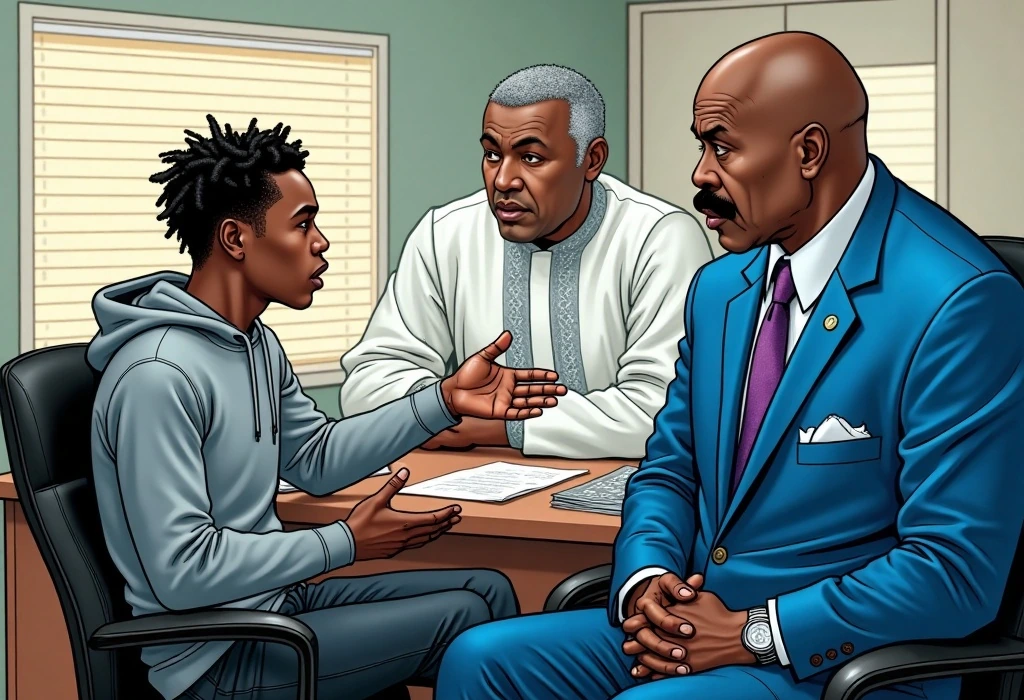
Mr. Collins proposes his leased blocked account scheme to Sylvester and Ejike.
In a cramped Enugu office that smelled strongly of diesel exhaust, Mr. Collins leaned across his glass desk. His shiny bright blue polyester suit caught the harsh fluorescent light as he tapped a laminated flyer. He was smiling with the absolute certainty of a man who had never faced a visa officer.
"Why worry yourself about finding twelve thousand Euros in this economy?" Mr. Collins asked, lowering his voice conspiratorially. "Public university in Germany is free. I have a partner who will rent you the blocked account confirmation letter for just a small fraction of the fee. The embassy will see the paper, approve the visa, and you are gone!"
Sylvester Uzor leaned forward, his fingers tracing the edge of his white kaftan. "So we don't need to lock up twenty million Naira in a German bank? You can just generate this paper for us?"
The Mother's Red Flag
Chizoba expresses her deep skepticism about the agent's shortcut.
That evening, the family sat around the dining table. The food had gone cold, but nobody was eating. Chizoba Uzor stared at the handwritten breakdown Mr. Collins had given her husband. Her shoulder-length black micro-braids swayed as she shook her head slowly, her purple lace wrapper rustling in the quiet room.
"Sylvester, this is too easy," Chizoba said, her voice sharp with caution. "Since when does Germany accept rented papers? My cousin's son went to Munich last year, and they scrutinized every single Euro. If they catch Ejike with a fake account, he will get a federal ban."
"But Chizoba, where will I find twenty million Naira cash right now?" Sylvester pleaded, rubbing his temples. "The boy's admission letter at Munster is already here. Collins says this is how everyone does it."
Ejike looked at his father's tired face. "Dad, I want to go, but I don't want to start my life in Europe as a fugitive. Let's get a second opinion."
Enter Dhub Education
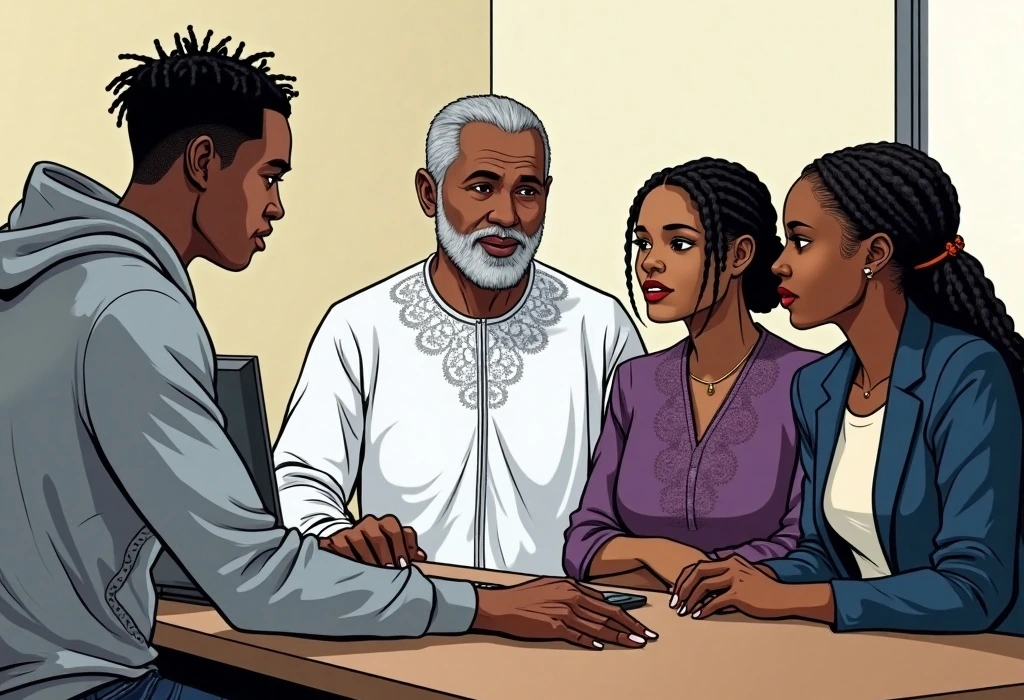
Ifeoma explains the strict activation process of German blocked accounts.
The next afternoon, the Uzor family sat in the calm, quiet office of Dhub Education. Ifeoma Nze listened patiently as Sylvester explained Mr. Collins' proposal. She sat straight in her navy blue blazer, her expression serious but empathetic.
"Mr. Uzor, I am very glad you did not pay for that service," Ifeoma said gently. "What Mr. Collins is describing is not just a shortcut; it is a major immigration offence. The German authorities are incredibly thorough. Let me show you how the process actually works."
She turned her screen slightly so they could see the official guidelines. "The blocked account is not just a paper show for the visa interview. Once Ejike arrives in Germany, he cannot access a single cent of that money until he physically registers his address—a process called Anmeldung—and activates his account with a local provider."
The Identity Trap
Ifeoma warns the family about the severe risks of third-party account setups.
Ifeoma leaned closer, wanting them to understand the mechanics. "When Ejike goes to activate that account in Germany, the bank will verify his passport and physical German address. If the account was set up using a third party's leased funds under a false arrangement, the system flags it immediately. You will be stranded in Germany with no money, and your residence permit will be revoked."
Chizoba gasped, looking at her husband. "You see? I told you! They would have locked our boy up in Frankfurt!"
"It is a very common trap," Ifeoma continued. "Many unverified agents disappear the moment you board the plane. At Dhub, we do not touch your money. You open the blocked account directly in Ejike's name with an approved provider like Expatrio or Fintiba. You transfer the funds yourself, and you receive the official confirmation directly from the German bank."
A Genuine Path Forward
Ifeoma maps out the legal alternative of a formal commitment letter.
Sylvester let out a long, slow breath, the tension leaving his shoulders. "Thank you, Ifeoma. You have saved us from a massive disaster. But what do we do about the funding? It is still a very large amount of money to raise all at once."
"We have options," Ifeoma smiled, shifting her notes. "First, Ejike's admission at Munster is valid for the next intake as well, giving us six months to plan. Second, do you have a close relative who is a resident or citizen in Germany?"
Sylvester's eyes lit up. "Yes! My brother-in-law, Dr. Amadi, is a practicing pediatrician in Stuttgart!"
"Perfect," Ifeoma said. "He can sign a formal commitment letter—a Verpflichtungserklärung—at his local immigration office. If approved, this legally replaces the blocked account requirement entirely. We will guide you through the exact paperwork to send him. Let us do this the right, legal way."
What this story proves: There are no shortcuts to Germany; local registry and bank activation processes make fake financial documentation a guaranteed route to a visa ban.
The 18-Month Post-Study Job-Seeker Permit
One of the most generous aspects of the German education system is the post-study pathway. Once you complete your Bachelor's, Master's, or PhD at a German institution, you are entitled to a post-study job-seeker permit under Section 20 of the Residence Act (AufenthG). This permit allows you to remain in Germany for up to 18 months to find a job that aligns with your qualifications.
Unlike standard job-seeker visas for those who studied abroad, this specific graduate permit grants you unlimited work rights. You can work any job—full-time or part-time—to support yourself financially while you conduct your professional job hunt. Once you secure a qualified job offer relevant to your degree, you can transition directly to a German work permit or an EU Blue Card without having to return to Nigeria to reapply.
Reviewing your financial requirements early prevents visa complications.
Who Germany Suits—and Who Will Struggle
Germany is an exceptional study destination, but it requires a specific mindset. It perfectly suits self-motivated, academically rigorous students who are willing to learn the German language and adapt to a highly structured culture. If you are focused on long-term career growth in engineering, tech, or sciences, Germany offers an incredible return on investment.
Conversely, families who do not have the upfront cash to fund the €11,904 blocked account will find the visa process impossible. Students who expect a highly guided, hand-held university experience or who refuse to learn German will also struggle to secure professional employment. Navigating the strict admissions criteria, university correspondence, and embassy requirements can be overwhelming. To protect your family from bad advice, we recommend reviewing our agent verification safety checklist before committing any funds to a third party.
Frequently asked questions
Can I study in Germany without a blocked account?
Yes, but only if you have an alternative recognized proof of financial resources. This includes a formal letter of commitment (Verpflichtungserklärung) from a relative living in Germany who guarantees to cover your costs, or a recognized scholarship certificate.
How much money must be in the German blocked account for 2026?
For the 2026 academic year, the standard blocked account deposit is €11,904. This allows international students to withdraw a maximum of €992 per month to cover their living costs.
Can I work full-time on a student visa in Germany?
No, you cannot work full-time indefinitely. You are legally allowed to work either 140 full days or 280 half days per calendar year, or up to 20 hours per week during the semester.
What happens to my blocked account money if my German visa is refused?
If your visa is refused, the blocked account provider will release your funds back to your original bank account once you present the official visa rejection letter from the German Embassy.
The German study visa process is highly rewarding but incredibly strict. Don't risk your family's hard-earned savings on unverified agent shortcuts or 'rented' document schemes. Speak to a dedicated counsellor at Dhub Education today to map out a legal, genuine, and successful path to Germany.
Researched and drafted with AI against the sources listed above, then published by Dhub Education. Policies and costs change quickly — always confirm details with the university or the relevant government body before you act.