Why Degrees Fail to Get Jobs: The Hard Truth for Nigerian Study-Abroad Families
Discover why degrees fail to get jobs abroad and the exact steps Nigerian students can take to beat underemployment and secure visa sponsorship.
August 14, 2026
9 min read
Dhub Editorial
Short answer: To get a job after studying abroad, graduates must choose fields with low underemployment, gain practical experience through integrated work placements, and align their career paths with realistic visa sponsorship salary thresholds, rather than relying solely on the academic credentials of their degree.
The short version
Over 40% of recent graduates are underemployed, working in jobs that do not require a bachelor's degree.
Underemployment rates vary drastically by major, with technical fields like nursing and computer science being the safest.
The UK Graduate visa offers post-study work rights but cannot be extended without meeting strict Skilled Worker sponsorship salary thresholds.
Vanishing traditional internships mean students must target programs featuring work-integrated learning or paid apprenticeships.
Early, strategic career planning and practical skills acquisition are what separate successful graduates from those who remain underemployed.
The Harsh Truth: Why Degrees Fail to Get Jobs Abroad
Many Nigerian families spend millions of Naira sending their children to study abroad, expecting that a foreign degree guarantees professional success. However, global job market realities tell a different story. In 2024, the overall underemployment rate for recent graduates stood at 41.9%, and recent 2026 estimates show it remains steady at 42%. This means more than four-in-ten graduates are stuck in roles that do not even require a university degree. When you ask why degrees fail to get jobs, the answer lies in the growing disconnect between classroom credentials and the practical, sector-specific skills employers actually demand. To understand how to avoid this trap, read our guide on Why Degrees Fail: How to Choose a Study Abroad Course for Job Sponsorship.
The Underemployment Trap by Major
The risk of underemployment is highly dependent on your child's chosen major. For example, criminal justice majors experience a staggering 67.2% underemployment rate, while performing arts sits at 62.3% and anthropology at 55.9%. On the other hand, vocational and technical degrees offer a shield against this trend. Nursing has an underemployment rate of just 9.7%, while computer science and chemical engineering both sit comfortably at 16.5%. Parents must look beyond the prestige of a university name and focus heavily on the data surrounding underemployment by major.
Comparison of Post-Study Visa Options in the UK
Feature
Graduate Visa (Post-Study Work)
Skilled Worker Visa
Sponsorship Required
No sponsor needed
Yes, licensed employer sponsor required
Maximum Duration
2 years (3 years for PhD)
Extendable indefinitely if requirements met
Salary Threshold
No minimum salary threshold
Minimum £30,960/year (or £23,200 for health/education)
Job Skill Level
Any skill level, any sector
Must meet specific skilled occupation codes
Landing a professional role requires aligning your studies with high-demand sectors.
The Visa Sponsorship Wall: Graduate Route vs Skilled Worker
Many students rely on the UK Graduate visa, an unsponsored post-study work route allowing them to stay for up to two years (three for PhDs) to work at any skill level with no salary threshold. However, this visa cannot be extended. To stay long-term, they must transition to the Skilled Worker route, which demands a licensed sponsor and a minimum salary threshold of £30,960 per year (approximately ₦62,000,000) or 70% of the going rate for new entrants. For certain health and education roles, the threshold is lower at £23,200 per year (approximately ₦46,400,000). Many companies, especially start-ups, face high compliance costs and are reluctant to sponsor, leaving graduates with no choice but to leave when their initial visa expires. To evaluate if this financial investment matches the career returns, read The Raw Maths of UK Study in 2026: An Honest Cost-Versus-Return Guide for Nigerian Families.
The Story
The Pivot to Reality
A determined Nigerian mother and her son discover that a high-pressure study-abroad agent has set them up for career failure, forcing them to pivot their plans to secure a real future.
Timi Alao — Dhub Education Counsellor
Mrs. Florence Adebayo — Mother, secondary school teacher
Kunle Adebayo — Son, prospective student
Mr. Benson — Unverified study-abroad agent
The Looming Deadline
Kunle faces the harsh reality of visa sponsorship limits in his final months.
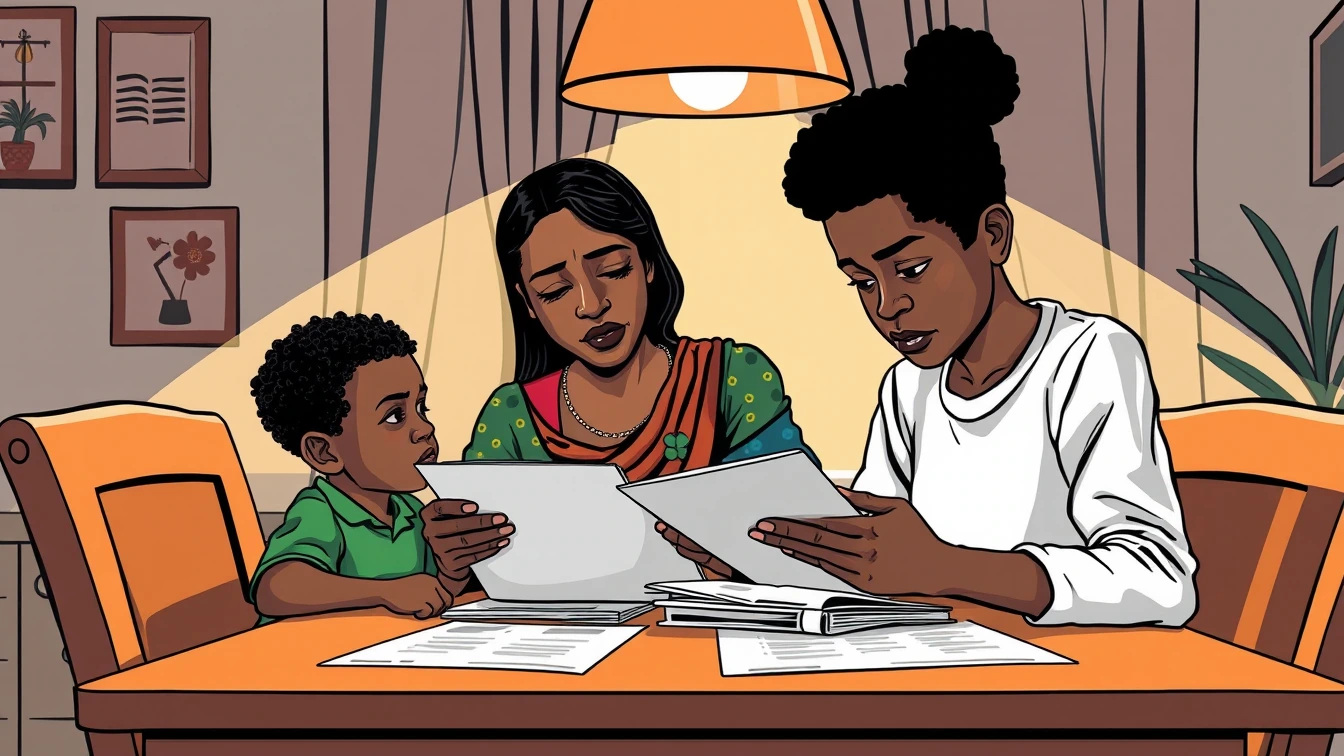
Kunle sat at the dining table, his laptop screen casting a cold glow on his face. The email from the Bristol-based media firm was brief: they were delighted with his talent, but they could not offer sponsorship when his Graduate visa expired. Outside, the heavy hum of the neighborhood generator filled the damp evening air.
"Is it another 'no' from those London people, Kunle?" Mrs. Florence Adebayo asked, leaning against the doorframe. Her face was lined with the exhaustion of a mother who had spent her pension on a dream.
"They said they cannot sponsor the transition to a Skilled Worker route," Kunle said quietly. "My Graduate visa has only three months left, Mum. I have sent eighty applications."
"But the man in Ikeja told us this Performing Arts degree was a guaranteed ticket," Florence said, her fingers tightening. "He said employers would fight for you."
"The employers are fighting to avoid sponsorship fees, Mum," Kunle replied, staring at his hands.
The Agent's Golden Promises
Mr. Benson sells a flawless dream of automatic post-graduation employment.
Two years earlier, the air in Mr. Benson’s high-pressure Lagos office had been thick with the scent of cheap air freshener and grand promises. Mr. Benson had leaned across his glass desk, gesturing grandly with a gold pen.
"Performing Arts at this university is the secret key," Mr. Benson had boasted, his mustache twitching as he smiled. "Once Kunle steps foot in London, the jobs will look for him. You do not need to worry about the details."
"And what about the visa after he graduates?" Mrs. Florence Adebayo had asked, holding her bag tightly against her chest. "I want to be sure my money is safe."
"The UK government has a post-study route," Mr. Benson had replied smoothly, waving his hand dismissively. "It is automatic. Trust me, I have sent fifty students there this year alone."
"It sounds so easy," Kunle had whispered, his eyes wide with excitement. "I will make you proud, Mum."
The Crack in the Facade
Florence demands written proof as the agent's professional facade begins to fracture.
The cracks in Mr. Benson's promises appeared three weeks later when Mrs. Florence Adebayo received a WhatsApp voice note from her sister in London. A family friend's son, who had studied the same course, was working twelve-hour shifts in a warehouse because no creative firm would sponsor him.
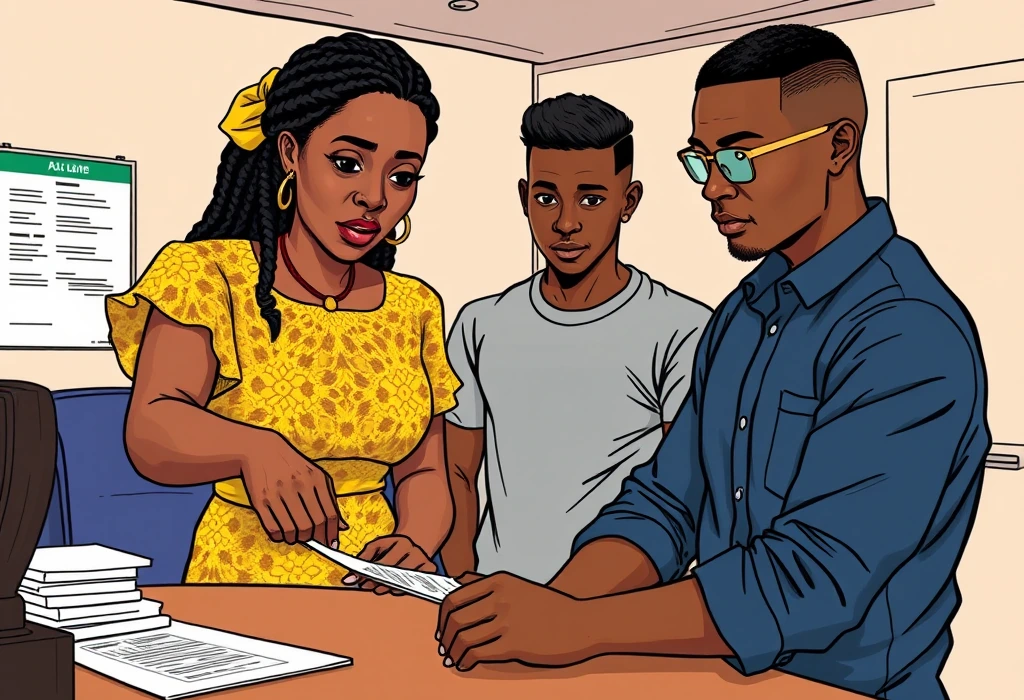
"Mr. Benson, I need to see the written refund policy and the official employment statistics for this course," Florence said, standing inside the agent’s crowded office.
"Ah, Mummy, why are you worrying yourself with internet stories?" Mr. Benson said, his smile tightening. "The admission is already processing. If you withdraw now, you lose the registration fee."
"I am not leaving this office until I see the paperwork," Florence insisted, her voice rising above the chatter of other waiting families.
"We do not give out internal documents," Mr. Benson snapped, his polite demeanor vanishing. "If you want to pull out, that is your business."
The Truth Revealed
Timi Alao explains the harsh math behind post-study visa salary thresholds.
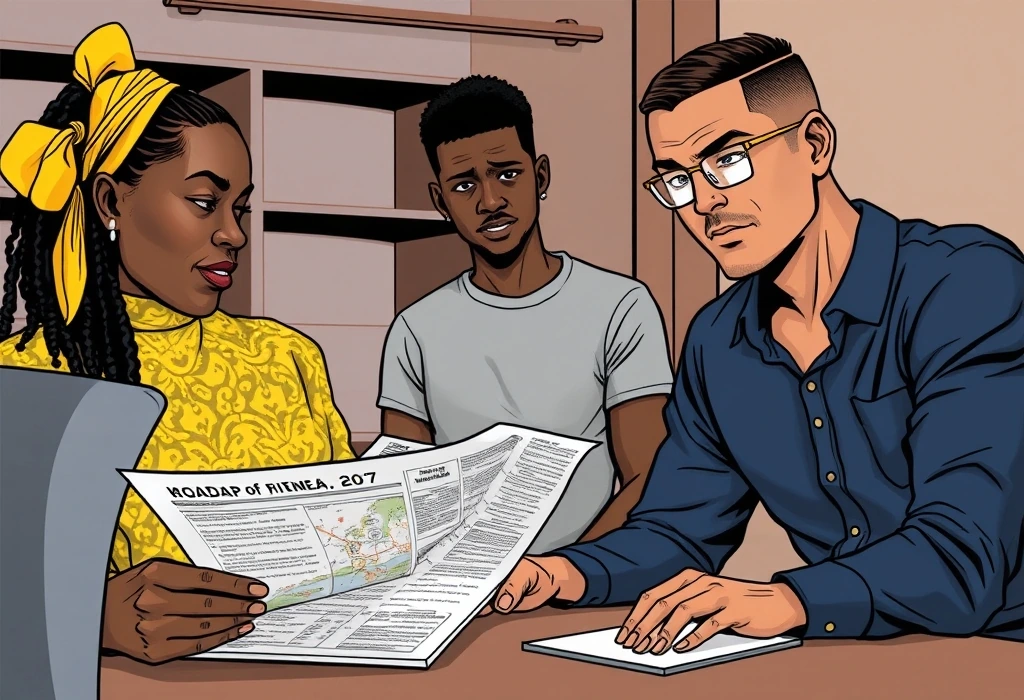
The next morning, Mrs. Florence Adebayo and Kunle sat in the quiet, orderly offices of Dhub Education. Timi Alao listened patiently, reviewing the admission letter Mr. Benson had secured. He did not offer easy reassurances; instead, he pulled up official UK government databases.
"The Graduate visa allows him to work for two years, but it cannot be extended," Timi explained, adjusting his gold-rimmed glasses. "To stay, an employer must sponsor him under the Skilled Worker route, which requires a minimum salary of £30,960."
"Is that possible with a Performing Arts degree?" Kunle asked, his voice shaking slightly.
"The underemployment rate for performing arts is over sixty-three percent," Timi said honestly. "Most graduates in this field do not land jobs that require a degree, let alone meet that high salary threshold."
"Thank God I came here," Florence whispered, wiping her brow. "What can we do to change this outcome, Mr. Timi?"
A New Pathway Forward
The Adebayo family partners with Dhub Education to secure a viable path.
Timi Alao did not just point out the problem; he presented a practical path forward. He coordinated directly with Dhub Education's UK-based team to identify universities offering integrated work placements and degrees with low underemployment.
"We need to pivot Kunle to a Computer Science program with a built-in year-in-industry placement," Timi said, sliding a detailed, written document across the desk. "This program aligns with roles that have a sixteen percent underemployment rate."
"But can he handle the switch?" Florence asked, looking at her son.
"I will work day and night, Mum," Kunle said, a look of determination replacing his fear. "This is the real plan we needed."
"We will manage the entire transition and verify every document with the university," Timi said. "You will have copies of everything."
What this story proves: Aligning your course selection with real-world visa salary thresholds and choosing universities with integrated work placements is the only reliable path to post-graduation employment.
The Vanishing Internship and the Employability Skills Gap
Historically, internships were the bridge to permanent employment. However, post-pandemic cuts have reduced short-term internships by up to 29% and year-in-industry placements by 25%. This has widened the employability skills gap. Entry-level tasks like research and analysis are increasingly handled by AI tools, meaning employers expect graduates to enter the workforce fully trained rather than learning on the job. To combat this, proactive students must seek out institutions offering integrated models like work-integrated learning and paid graduate apprenticeships.
Dhub Education helps families design practical pathways to real career outcomes.
Concrete Steps to Beat the Underemployment Trap
What separates the 27% of graduates who land course-related roles from the rest? It is aggressive, early career planning. Do not wait until graduation to look for work. Seek out universities that embed work placements directly into their curriculum, build a portfolio of digital competence, and target sectors with low underemployment. If you are exploring whether study-abroad pathways are still viable for your family under current regulations, read Is UK Study Still Worth It for Nigerian Students?.
Frequently asked questions
Why do so many international graduates fail to find jobs in their field?
Many graduates choose majors with high underemployment rates or fail to bridge the employability skills gap. Research shows only 27% of college graduates work in a job closely matched to their major, while overall underemployment for recent graduates hovers around 42%.
Can I work in the UK without a sponsor after graduation?
Yes, the UK Graduate visa allows you to live and work at any skill level without an employer sponsor for up to two years (three years for PhDs). However, this visa cannot be extended, and you must transition to a sponsored Skilled Worker visa afterward.
What are the salary requirements to switch to a Skilled Worker visa?
To switch from a Graduate visa to a Skilled Worker visa as a new entrant, you must be paid a salary that meets or exceeds £30,960 per year, or 70% of the going rate for the occupation. For specific health and education roles, the threshold is £23,200 per year.
Researched and drafted with AI against the sources listed above, then published by Dhub Education. Policies and costs change quickly — always confirm details with the university or the relevant government body before you act.