Cost of Studying in Germany for Nigerian Students: The 2026 Line-by-Line Budget
Discover the actual cost of studying in Germany for Nigerian students in 2026, from the €11,904 blocked account to monthly rent and post-study visa fees.
October 12, 2026
11 min read
Dhub Editorial
Short answer: The cost of studying in Germany for Nigerian students in 2026 primarily involves a mandatory blocked account deposit of €11,904 (approx. ₦21,000,000) for living expenses. While public universities charge no tuition, students pay a semester fee of €100–€350. Monthly living costs, including rent and health insurance, typically range between €900 and €1,200.
The short version
Most public German universities charge zero tuition, requiring only a small semester contribution of €100 to €350.
For 2026, the required blocked account amount is €11,904, released at €992 per month to cover living costs.
Nigerian graduates of German universities can stay for 18 months on a post-study visa to find a job in their field.
Private university tuition is significantly higher, ranging from €5,000 to €20,000 per year.
English-taught programmes are widely available, with over 1,500 master's options in the public system.
The Real Cost of Studying in Germany for Nigerian Students
When Nigerian families look at European education, they often expect the massive tuition burdens found in the UK or USA. Germany operates differently. The cost of studying in Germany for Nigerian students is unique because the government heavily subsidises public higher education. At most public institutions, tuition is €0.
However, "free" does not mean "no cost". You are still responsible for your own upkeep, and the German government requires you to prove you can afford it before they grant a visa. If you are navigating this for the first time, it is easy to be misled by agents who use outdated figures. Understanding the line-by-line expenses is the only way to ensure your child doesn't face a visa refusal or, worse, financial hardship upon arrival.
The 2026 Blocked Account: Your Biggest Upfront Expense
The single most important figure for your budget is the Sperrkonto, or blocked account. This is not a fee paid to the university; it is your own money, held in a restricted German account to prove you can survive for one year. According to official requirements for 2026, you must deposit exactly €11,904 (approximately ₦21,000,000, depending on the exchange rate).
Once you arrive in Germany, the bank releases €992 each month into your current account. This system ensures that students do not run out of money mid-semester. For many Nigerian parents, raising this lump sum is the hardest part of the journey. This is where showing proof of funds for a student visa becomes critical. At Dhub Education, we often see families struggle because they weren't told about the 2026 inflation adjustment in time.
Estimated Annual Costs for Nigerian Students in Germany (2026)
Expense Category
Public University
Private University
Tuition Fees
€0
€5,000 – €20,000
Semester Contribution
€200 – €700 (Annual)
Varies (Usually included)
Blocked Account (Living Costs)
€11,904 (Mandatory)
€11,904 (Mandatory)
Health Insurance
~€1,400 (Annual)
~€1,400 (Annual)
Total Upfront Budget
~€13,500 – €14,000
~€18,500 – €33,000
Public vs. Private: Choosing the Right University
While public universities are famous for being tuition-free, they are also highly competitive. They require a "semester contribution" of roughly €100 to €350, which often includes a public transport pass. Private universities, however, are a different story. They typically charge between €5,000 and €20,000 per year.
Is the private route worth it? For some, yes—they often have smaller class sizes and more direct support for international students. But for a family on a strict budget, the public system is the gold standard. You can find out more in our honest 2026 reality check on German tuition. Deciding between these paths requires a clear-eyed look at your long-term finances, not just the first year's deposit.
The Story
The €1,904 Gap
Days before his embassy appointment, Ifeanyi discovers his 'discount' agent used outdated 2024 figures, leaving his German dreams nearly €2,000 short.
Ifeanyi — Aspiring Master's student from Aba
Mr. Okoro — Ifeanyi's father, a textile wholesaler
Tobi — Dhub Education Counsellor
The Chief — An unverified local agent
The Aba Celebration
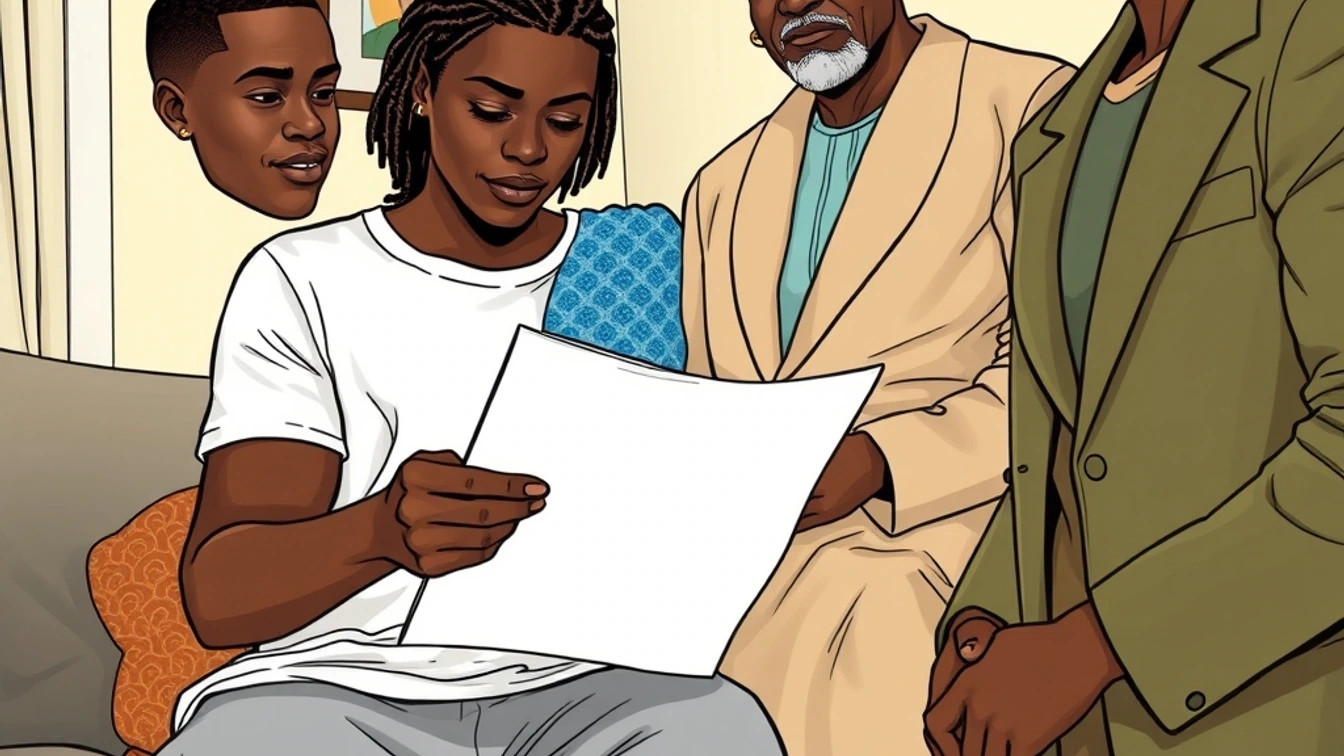
Mr. Okoro shows Ifeanyi the agent's checklist, confident the funds are sufficient.
The generator hummed outside the Okoro family office in Aba, providing a steady rhythm to the afternoon’s excitement. Mr. Okoro slapped a heavy hand on the desk, beaming at his son, Ifeanyi. On the table sat a printed checklist from 'The Chief,' a local agent who had promised a 'special connection' at the German embassy. The list was clear: a blocked account of €10,000 was all that was needed for the visa appointment scheduled in just four days.
"I have the ten thousand ready, Ifeanyi," Mr. Okoro said, his voice thick with pride. "We will go to the bank tomorrow, lock the money, and by next month, you will be in Berlin. The Chief says he has done this for ten boys this year alone. He told me the government figures haven't changed since he started his office."
Ifeanyi looked at the yellow polo shirt he’d chosen for his flight—he was already dressing for a future he could almost touch. But a small doubt gnawed at him. He’d seen a post on a forum mentioning new rules for 2026. "Papa, shouldn't we double-check? The Chief's office is just a room above the chemist. Maybe we should talk to those people at Dhub?"
The Chief's Assurance
Later that evening, the family met The Chief at a nearby restaurant. He arrived with the air of a man who owned the street, his gold chain catching the dim light. When Ifeanyi brought up the 2026 figures he'd seen online, The Chief waved it away with a dismissive laugh that didn't reach his eyes. "Listen to your father, boy. These websites just want to scare you so you pay more. I have the direct link. Ten thousand Euro is the standard. I have the papers right here."
He slid a photocopied document across the table. It looked official, but the date at the bottom was blurred. Mr. Okoro nodded, satisfied, but Ifeanyi noticed the man’s hand tremor slightly as he tucked the paper back into his kaftan. The Chief insisted on an immediate 'processing fee' in cash to secure the appointment slot. "Everything is moving fast. If you wait, the slot is gone," he warned, his voice taking on a sharp, urgent edge.
"We don't do things in the dark, Chief," Mr. Okoro said, his businessman's instinct finally flickering to life. "If the boy wants a second opinion, we get one. It’s my money, after all."
A Cold Dose of Reality
Tobi shows the family the official 2026 requirement, revealing a significant shortfall.
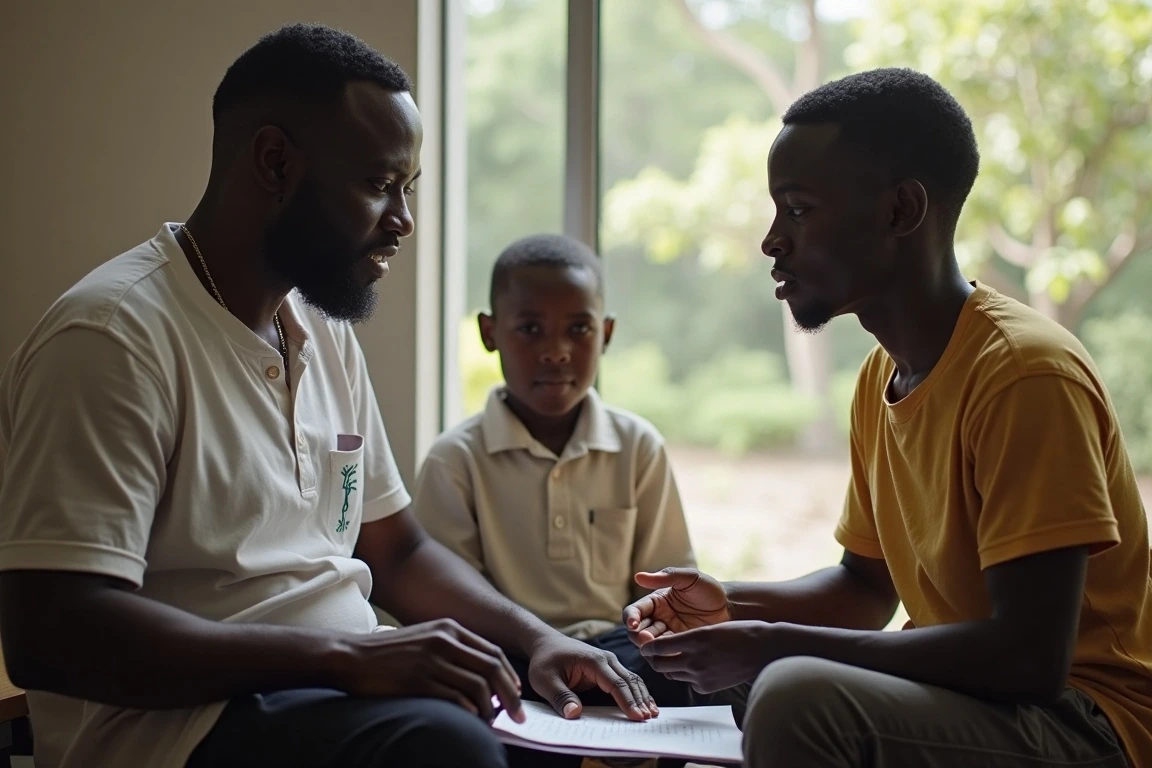
The next morning, they sat in the Dhub Education office. Tobi, the counsellor, didn't use photocopies or vague promises. He opened the official German Federal Foreign Office portal on a large screen for them to see. "Mr. Okoro, I'm glad you came in today," Tobi said, his tone calm but firm. "If you had gone to the embassy with ten thousand Euro, they would have refused the visa on the spot. For 2026, the blocked account amount is exactly €11,904."
The silence in the room was heavy. Mr. Okoro’s white senator suit seemed to lose its crispness as he slumped in his chair. The gap wasn't just a few Naira; it was nearly €2,000—over three million Naira at the current parallel rate. "The Chief told us... he said he had a connection," Mr. Okoro whispered, his face etched with a sudden, deep fatigue. "He almost cost us everything."
"The law doesn't care about connections, sir," Tobi explained, pointing to the line-by-line breakdown on the screen. "They want to see that Ifeanyi has exactly €992 for every month he is there. Anything less is an automatic 'no'. We see this every week—families lied to by agents using 2024 numbers."
The Race Against the Clock
The family works with Tobi to document the additional funds correctly.
With the appointment only three days away, the Okoro family was in a state of controlled panic. They had the initial ten thousand, but the extra €1,904 was tied up in textile stock at the market. Tobi didn't just give them the bad news and send them away. He stayed late, helping them look at their documentation to see how they could legitimately restructure their proof of funds without triggering a red flag.
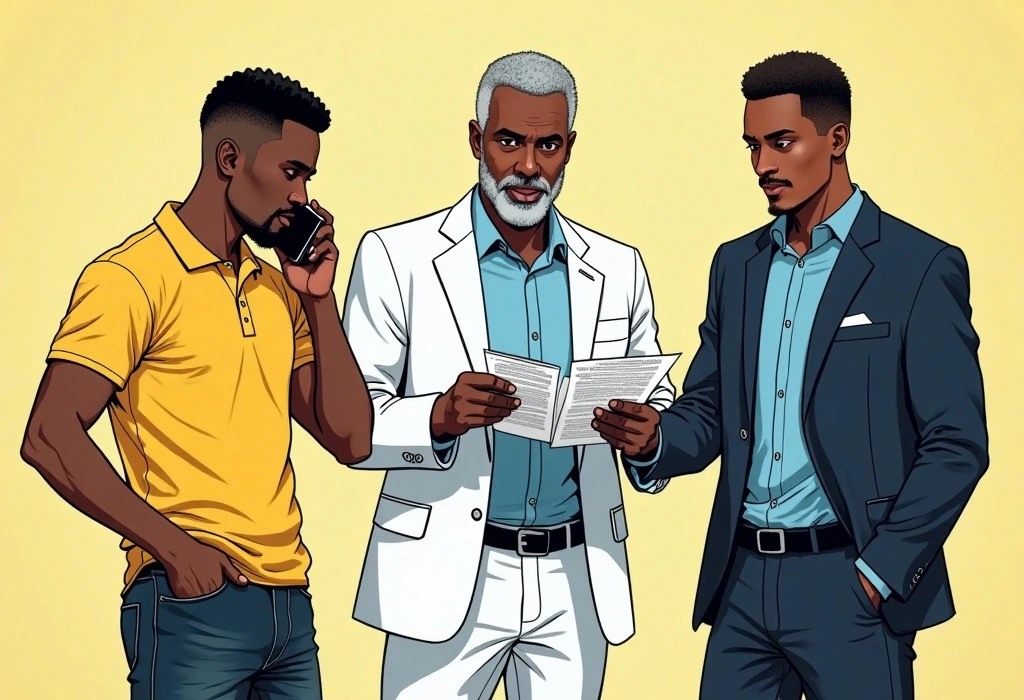
"We can't just throw money into the account today and hope for the best," Tobi cautioned as Mr. Okoro worked his phone, calling business associates in a frantic attempt to liquidate stock. "The embassy looks for 'lump sum' deposits that don't have an explanation. We need to document exactly where this extra money came from—the sales receipts, the bank statements. We do this by the book, or we don't do it at all."
Ifeanyi watched his father, a man who rarely asked for help, lean entirely on Tobi's guidance. The Dhub office felt like a fortress compared to the chemist’s upstairs room. Here, every document was scanned, every date verified, and every Euro accounted for.
The Correct Receipt
With the correct funds and documentation, Ifeanyi is finally ready for his visa.
Forty-eight hours later, the final deposit was confirmed. The blocked account stood at the required €11,904. Tobi handed Ifeanyi a neatly organised folder. There were no blurred dates or photocopies here; every document was original, verified, and aligned with the 2026 regulations. "You're ready, Ifeanyi," Tobi said, a small smile finally appearing. "You have the right amount, the right insurance, and the right story to tell the officer."
Mr. Okoro stood up and shook Tobi's hand with a grip that said more than words could. "I thought I was a big man who knew how the world worked," he admitted, adjusted his silver buttons. "But this system... it’s not for amateurs. If we had stayed with that Chief, my son would be sitting at home with a 'Refused' stamp and my money would be in a ghost's pocket."
As they walked out into the Lagos sun, Ifeanyi clutched the folder to his chest. The yellow polo shirt didn't just feel like a costume anymore; it felt like a uniform. They hadn't just found the money; they had found the truth, and in the world of German visas, that was the only currency that actually mattered.
What this story proves: An agent's 'special connection' is no match for the strict, updated financial requirements of a German student visa.
Proper documentation is the only way to secure a German student visa in 2026.
Monthly Living Expenses: Where the Money Goes
Beyond the blocked account, you need to understand the daily cost of life in German cities like Berlin, Munich, or Essen. On average, a student needs between €900 and €1,200 per month. Rent is the largest variable, usually costing between €300 and €600 depending on whether you secure a spot in a student dormitory or rent privately.
Health Insurance: Mandatory for all students, typically costing €110–€120 per month.
Food and Groceries: Expect to spend €150–€250 monthly.
Semester Contribution: Roughly €150–€350 every six months.
These figures are practical and realistic. If an agent tells you that you can live on €500 a month by "managing," they are setting you up for failure. German authorities monitor these costs closely, and falling below the minimum can affect your residency permit renewal.
Working While Studying to Offset Costs
The good news is that you don't have to rely solely on your savings. International students in Germany have the right to work part-time. Under the rules updated in 2024, you can work 140 full days or 280 half days per year. Many students find jobs in hospitality, logistics, or as student assistants at their university. This income can significantly reduce the pressure on your family back in Nigeria, but it should never be your primary plan for the blocked account funds.
Post-Graduation: The 18-Month Opportunity
The ultimate return on your investment in a German degree is the post-study work visa. After you graduate, you are entitled to stay in Germany for up to 18 months to find a job that matches your qualifications. During this year and a half, you can work any job—full-time or part-time—to support yourself while you interview for professional roles. The application fee is modest, around €100, and it serves as a vital bridge to a permanent career in Europe's largest economy.
Frequently asked questions
How much money do I need in my blocked account for 2026?
For a standard student visa in 2026, you must deposit €11,904. This covers 12 months of living expenses at a rate of €992 per month.
Can I use a scholarship instead of a blocked account?
Yes, a full scholarship from a recognised organisation like the DAAD can serve as proof of funds. If you have a partial scholarship, you only need to deposit the remaining balance into a blocked account to reach the €11,904 minimum.
How long can I stay in Germany to look for a job after graduating?
Nigerian graduates of German universities can apply for a post-study job seeker visa, which allows you to stay for up to 18 months to find employment related to your degree.
Are there tuition fees at German public universities for Nigerians?
In most cases, no. Public universities in Germany do not charge tuition to international students. You only pay a semester contribution of roughly €150 to €350, which often includes a public transport ticket.
Have questions about your own situation?
Every family's paperwork, budget and timeline is different. If you would like a second opinion or help getting started, reach Dhub Education directly:
Don't let outdated figures or vague promises derail your future in Germany. If you are ready to start your application with the correct 2026 budget, speak to a Dhub Education counsellor today for a line-by-line review of your financial plan.
Researched and drafted with AI against the sources listed above, then published by Dhub Education. Policies and costs change quickly — always confirm details with the university or the relevant government body before you act.